.jpg?width=48&height=48&name=Dylan%20Polz%20(new).jpg)
When specifying industrial filtration systems for oil and gas operations, engineering discussions frequently focus heavily on the nominal or absolute micron rating. It is a common assumption that a finer micron rating automatically equates to superior filtration and better protection for downstream equipment. This perspective treats a filter as a static mesh operating under pristine, unvarying laboratory conditions. However, evaluating a filter solely by its initial particle-retention rating overlooks how that rating holds up when exposed to the brutal physical realities of a live processing line.
In actual oilfield production and refining loops, fluid streams are rarely steady or uniform. Filters are continuously subjected to complex, multi-phase mixtures of hydrocarbons, produced water, heavy solids, and aggressive chemical additives. If the underlying filter media lacks structural stability, its nominal micron rating exists only on paper. Under operational stress, the geometric spacing of the filter pores can easily distort, turning a nominal 10-micron filter into a dynamic, unpredictable barrier that allows highly damaging, oversized particulates to pass straight through the system.
As a leading global authority in precision wire weaving, HAVER & BOECKER brings over 135 years of engineering expertise to severe service processing environments. Our teams specialize in manufacturing advanced, high-integrity filtration media engineered specifically to withstand the volatile mechanics of heavy industrial fluid streams. By focusing on structural rigidity and absolute pore consistency, we design filtration solutions that maintain their exact geometric tolerances under extreme operational loads, providing the dependable physical infrastructure needed to stabilize volatile oil and gas processes.
In this article, we will cover why structural stability is one of the most critical metrics for long-term filtration performance. We will examine the highly variable and demanding nature of oilfield fluid streams, analyze how dynamic pressure fluctuations physically distort standard filter mesh, and demonstrate how POROSTAR multi-layer diffusion-bonded architecture safeguards predictable flow characteristics. Finally, we will outline why shifting the engineering focus toward long-term operational integrity prevents catastrophic downstream failures and stabilizes your entire plant process.
The Unpredictable Reality of Demanding Oilfield Fluid Streams
Oilfield fluid streams are among the most volatile environments an industrial filter can encounter. Unlike controlled chemical processes that handle uniform, single-phase fluids, upstream production and midstream transport loops manage highly unpredictable mixtures. A single filtration point may simultaneously process high-viscosity crude oil, corrosive produced water, abrasive formation sand, and chemically aggressive drilling or fracking fluids. Successfully managing these complex streams requires a firm grasp on the core physics of solid-liquid filtration to ensure continuous particle separation without fouling the media.
This constant variability makes it incredibly difficult to maintain steady-state separation performance.
The primary challenge stems from the fact that fluid characteristics change rapidly and without warning. A processing line can transform from a clean hydrocarbon flow to a heavy slug of fine particulate or highly viscous emulsion within minutes.
These changing conditions dramatically alter the fluid dynamics within the filter housing. Viscosity spikes increase the shear stress acting on the filter face, while sudden surges in solid particulate loading form dense, irregular filter cakes that restrict fluid passage and rapidly accelerate the rate of containment accumulation. This disruption makes it crucial for plant operators to closely monitor and minimize pressure drop in your filtration system before high fluid resistance triggers an automatic safety trip.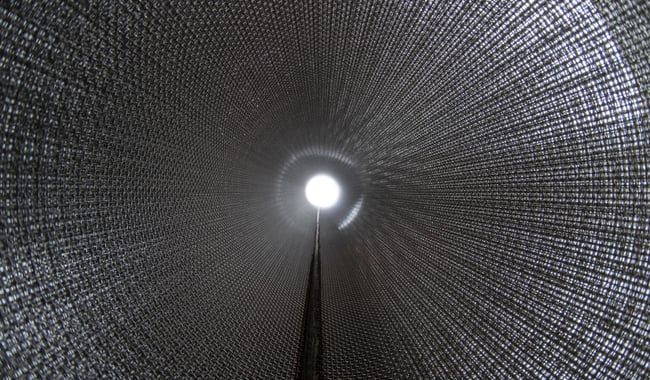
Relying on standard filter elements in these volatile environments creates a severe operational risk. If a filter is selected based entirely on a static micron rating without considering the physical demands of fluid variability, it will inevitably become the weakest link in the processing line.
To achieve true process control, engineers must look past laboratory data sheets and select filtration media that can adapt to changing fluid compositions without shedding captured contaminants or allowing particulate bypass.
How Downstream Pressure Fluctuations Distort Standard Mesh Ratings
In a functioning oil and gas facility, fluid pressure is never truly static. Downstream processes such as the cycling of high-pressure pumps, the opening and closing of control valves, and the backwashing of adjacent equipment create continuous, dynamic pressure fluctuations throughout the piping network.
These pressure surges and cyclical hydraulic shocks travel upstream, placing immense, localized mechanical stress directly onto the industrial filtration elements.
When exposed to these continuous pressure fluctuations, standard, unreinforced mesh or flexible cartridge filters suffer from a phenomenon known as pore migration. Because the individual strands or synthetic fibers are only held together by loose mechanical tension, the intense hydraulic forces physically push them apart.
This structural distortion alters the filter’s geometry in two highly destructive ways:
- Pore Stretching and Distortion: Under peak pressure surges, individual pore openings flex and widen, temporarily ballooning well past their rated micron size and allowing large, damaging particulates to pass directly downstream.
- Mechanical Fatigue and Blinding: As pressure cycles back and forth, the constant shifting of the media strands causes rapid material fatigue, leading to permanent structural deformation, premature blinding, or the catastrophic occurrence of broken woven wire along key stress points.
Looking to discover how choosing structurally stable filtration media drives down overall operational overhead, minimizes maintenance labor, and reduces unexpected plant shutdowns? Check out the article below to learn more:
This physical vulnerability means that a standard filter’s nominal micron rating is completely compromised during a pressure spike precisely when downstream assets need protection the most.
When pores shift and deform, the filter ceases to be a reliable barrier, turning into a variable restriction that directly threatens the integrity of downstream compressors, refining catalysts, and high-pressure injection pumps.
Extending Service Life with POROSTAR
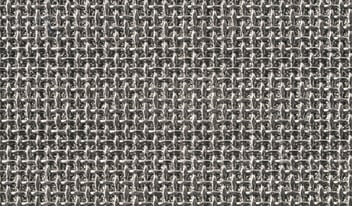
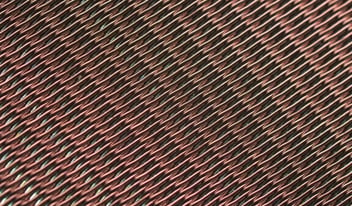
To eliminate the structural vulnerabilities that cause standard filters to deform under hydraulic shock, HAVER & BOECKER engineered POROSTAR, a multi-layer diffusion-bonded wire mesh laminate designed for severe service processing. Unlike standard woven wire elements that rely on loose mechanical overlays, POROSTAR is manufactured by permanently fusing multiple layers of precision wire cloth together at their microscopic intersections using high-temperature vacuum sintering.
This advanced diffusion-bonding process creates an unyielding, monolithic porous matrix that preserves absolute pore consistency under the most demanding field conditions:
- Total Prevention of Pore Migration: Because every single wire intersection is structurally welded at the molecular level, the pore apertures are mechanically locked in place, maintaining their exact micron rating even during extreme differential pressure spikes.
- Optimized Multi-Layer Architecture: The integrated design combines fine filtration layers with rigid, heavy-duty drainage and support mesh, providing incredible mechanical strength that prevents the media from buckling or collapsing under severe hydraulic stress.
- Predictable Flow Characteristics: The geometrically precise, non-deformable pore paths ensure a completely uniform fluid distribution across the filter face, keeping system backpressure predictable and maximizing overall throughput.
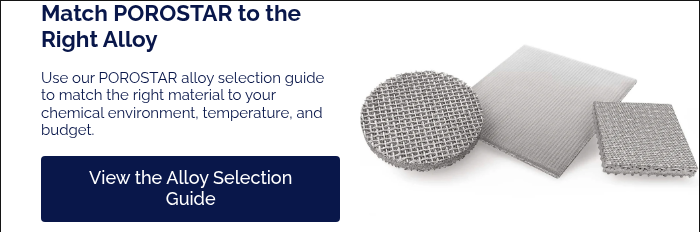
By providing a rigid, non-deformable filtration interface, POROSTAR eliminates the structural failures common to standard media.
The robust multi-layer laminate ensures that the filter maintains its exact separation efficiency and predictable flow behavior under continuous operational stress, protecting vital downstream assets and providing a stable engineering foundation that keeps your process running smoothly.
Shifting the Engineering Focus to Long-Term Operational Integrity
Achieving maximum operational efficiency in modern oil and gas facilities requires a fundamental shift in how filtration systems are engineered and specified. Continuing to prioritize initial, absolute micron ratings over structural media stability ensures a cycle of unpredictable fluid quality, unexpected downstream equipment wear, and frequent process interruptions. True process optimization is only achieved when engineering and design teams shift their primary focus to long-term operational integrity.
Investing in premium, structurally stable filtration media like POROSTAR multi-layer laminates provides the mechanical resilience needed to withstand the unpredictable realities of industrial fluid processing. By maintaining exact pore geometry through severe pressure fluctuations and highly variable fluid streams, these robust components deliver complete process predictability and uncompromised particle retention over an extended service life. For facilities looking to safeguard critical downstream equipment and streamline production, choosing filtration stability means less operational risk, minimal maintenance troubleshooting, and total process reliability.
At HAVER & BOECKER, we engineer advanced fluid containment and filtration components to help heavy-industrial operations globally achieve cleaner, safer, and entirely dependable manufacturing environments. Our over 135 years of industrial weaving experience allows us to manufacture multi-layer sintered laminates such as POROSTAR that maintain absolute structural integrity and precise pore tolerances under the most demanding field conditions. We focus on eliminating material defects and optimizing mechanical strength, ensuring your operations can minimize operational risks, protect critical equipment investments, and maintain total fluid consistency for every single run.
Want to understand how different testing standards define particle retention and to choose the right baseline for your process equipment? Read more in our blog article below: