.jpg?width=48&height=48&name=Dylan%20Polz%20(new).jpg)
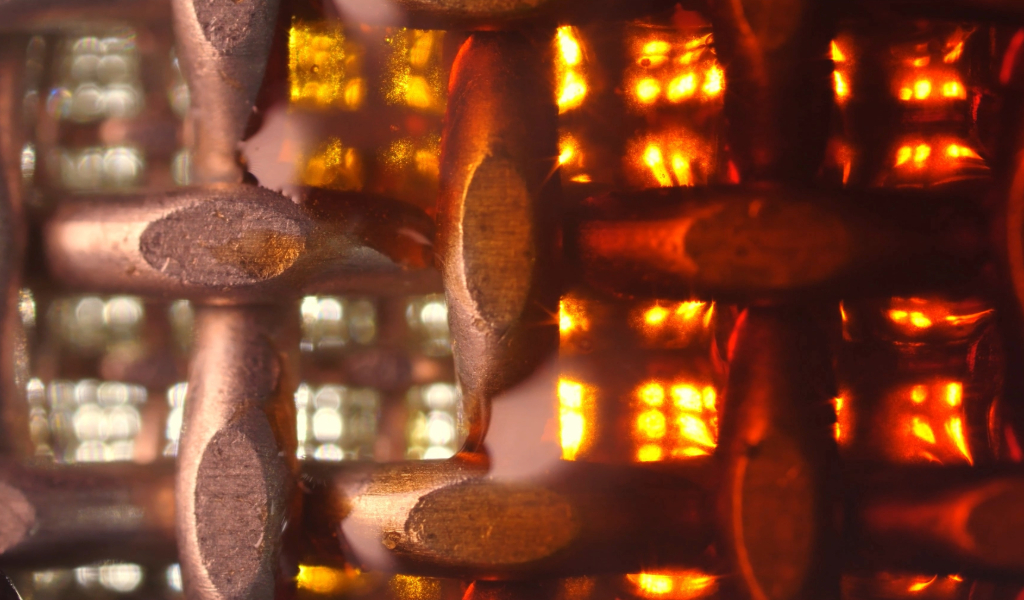
In standalone screen completions (SAS), selecting the correct mechanical sand barrier requires balancing particle retention accuracy against long-term fluid inflow. Premium sintered wire mesh screens, which are constructed by diffusion-bonding multiple woven wire layers, are widely specified across deepwater and unconsolidated reservoir environments.
However, outdated field assumptions and oversimplified laboratory testing often lead completion teams to misunderstand how these complex metallic laminates perform under real reservoir conditions.
Misconceptions regarding media plugging, flow capacity restrictions, and mechanical limits frequently cause engineers to over-design completions or default to less reliable hardware. Relying on broad generalizations rather than fluid dynamic fundamentals can result in restrictive wellbore factors, premature flow choking, or unnecessary capital expenditure.
At HAVER & BOECKER, our engineering of POROSTAR wire cloth laminates is built on transparent, evidence-based fluid dynamics. By metallurgically fusing fine filtration weaves with heavy structural support meshes, we engineer dimensional pore stability that withstands severe downhole stresses.
This article dispels common industry myths surrounding sintered wire mesh sand screens by examining surface bridging mechanisms that prevent premature plugging, clarifying how 3d pore networks maintain inflow capacity, evaluating multi-layer structural durability under severe differential pressure, and providing practical guidelines for long-term screen selection.
Debunking Premature Plugging Concerns
A frequent concern among completion teams is that multi-layer sintered wire mesh acts as a dense “depth filter” that inherently traps formation fines and plugs faster than simple wedge-wire screens.
Pore Architecture and Surface Bridging Mechanisms
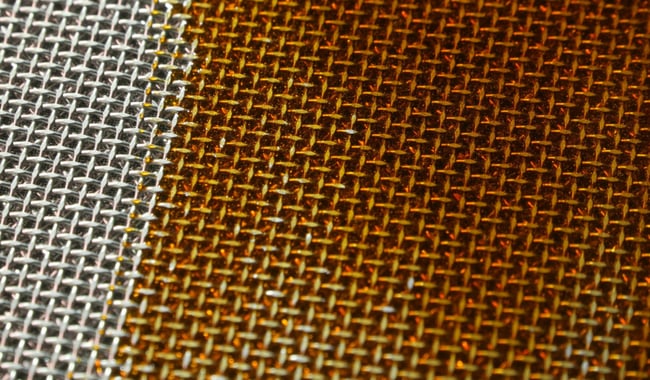
Laboratory slurry tests demonstrate that premium mesh media do not rely on tortuous depth trapping to stop sand. Instead, precision-engineered weaves initiate surface bridging.
When sized correctly to the formation’s particle size distribution (PSD), larger sand grains form a stable, permeable filter cake over the screen’s exterior surface. Fines smaller than the screen aperture pass harmlessly through the fixed pore structure rather than becoming permanently lodged within the matrix.
Evaluating the Trade-Offs:
- Coarse, Uniform Formations: In well-sorted reservoirs with high median grain sizes and minimal fines contact, traditional wire mesh screens or slotted liners can successfully bridge sand without the need for multi-layer sintered laminates.
- Low-Margin, Short-Life Asset Profiles: For low-cost onshore mature fields where initial capital outlay is the primary driver and drawdown pressures are low, specifying premium diffusion-bonded wire mesh can add unnecessary upfront costs without providing measurable operational upside over basic mechanical barriers.
Misconceptions Around Flow Capacity and Permeability
Engineers looking strictly at nominal open flow area percentages often conclude that woven mesh restricts hydrocarbon production compared to slotted pipes or wedge-wire profiles. This comparison misinterprets downhole fluid dynamics.
3D Porosity vs. 2D Surface Area
While wedge-wire screens present a 2D surface opening, multi-layer sintered wire mesh creates an interconnected 3D pore network.
Fluid entering a sintered laminate does not stop at a single blocked pore, but instead redirects sideways through adjacent pores within the drainage mesh layers.
Looking to explore more about how precision-woven metallic media elevates fluid processing reliability across every stage of the process? Check out our article below to learn more:
Pressure Drop and Skin Factor Mitigation
- Low Tortuosity Flow Channels: Solid-state diffusion bonding locks wire intersections in place, eliminating wire movement and preventing compaction under fluid shear.
- Distributed Drawdown: By spreading fluid influx evenly across microscopic apertures, sintered mesh reduces localized flow velocity spikes. This minimizes localized pressure drops, lowers turbulence-induced skin factors, and supports steady inflow rates.
Evaluating Structural Durability Under Extreme Pressure
Another common myth assumes that fine woven wires are inherently fragile and will crush, tear, or shear during compaction loads or screen running operations.
Solid-State Diffusion Bonding Dynamics
Un-sintered wire cloth relies solely on mechanical friction between crossing wires. Under severe compaction or bending loads during installation in deviated wellbores, individual wires shift, distorting pore apertures.
Sintering changes this dynamic completely, as subjecting multi-layer assemblies to high heat and pressure below the melting point diffusion welds every wire contact point into a rigid, monolithic plate.

Layer Construction
To withstand downhole mechanical stresses, a typical POROSTAR laminate utilizes a multi-tier structural design that includes:
- Outer Protective Shroud: Heavy perforated metal or coarse mesh that absorbs running loads and deflects high-velocity sand jet erosion.
- Precision Filtration Layer: Sintered weave with a precise micron retention rating.
- Heavy Drainage & Base Support Layers: High-tensile coarse wire meshes that provide structural rigidity against collapse during high differential pressure spikes.
Expectations for Long-Term Screen Reliability
Selecting effective sand control hardware requires looking beyond persistent field myths to evaluate verifiable fluid mechanics, formation particle size distribution, and structural load requirements. Sintered wire mesh is neither a universal solution for every wellbore nor an inherently prone-to-plugging depth media. When applied to appropriate reservoir candidate selections, it provides exceptional retention stability and inflow efficiency.
Relying on accurate particle retention mechanisms ensures that completion designs deliver expected hydrocarbon recovery rates. By facilitating external surface bridging rather than internal depth trapping, multi-layer sintered laminates maintain fluid permeability across extended production horizons. This mechanical stability protects subsurface completion assemblies and surface infrastructure from abrasive fines wear.
At HAVER & BOECKER, our technical team provides rigorous engineering support to help completion teams select ideal screen architectures. We analyze formation particle distributions, fluid properties, and downhole stress profiles to manufacture custom POROSTAR porous sintered wire cloth structures tailored to your specific field requirements.
Looking for the next step? Read our article below to learn more about filtration design in downhole tubes and how to prevent common system shutdowns: