.jpg?width=48&height=48&name=Dylan%20Polz%20(new).jpg)
In capital-intensive oil and gas projects, engineering teams focus heavily on pressure ratings, metallurgy, and flow dynamics during early design stages. However, specifying filtration media is often deferred to late procurement phases or treated as a commodity add-on. This oversight creates systemic vulnerabilities across subsurface completions.
Downhole tools, which include autonomous inflow control devices (AICDs), subsurface safety valves (SSSVs), and completion screens, rely on clean fluid circuits to function reliably. When particulate contamination bypasses filtration barriers, the resulting mechanical damage disrupts production schedules and forces emergency interventions. Addressing filtration during initial project scoping allows design teams to match filter media precisely to reservoir sand profiles, anticipated fluid velocities, and thermal profiles.
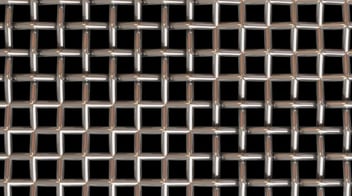
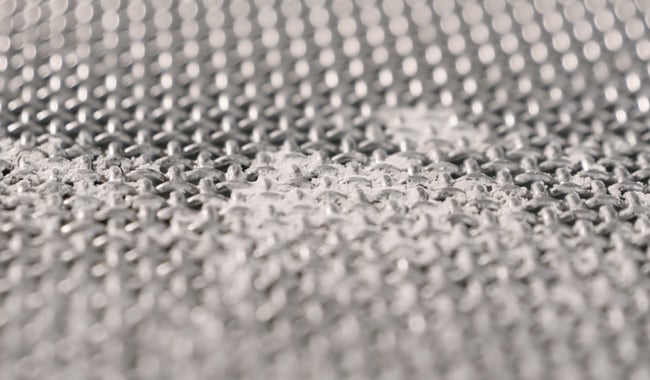
At HAVER & BOECKER, our engineering of POROSTAR porous sintered wire cloth laminates supports early-stage risk mitigation. By solid-state diffusion bonding multiple wire mesh layers into a monolithic plate, we deliver high-strength filter elements engineered to withstand severe differential pressures without structural failure.
This guide outlines how to execute a process risk assessment during design, quantifies the financial impact of inadequate filtration, explores maintenance access constraints in wellbore environments, and demonstrates the value of selecting engineered wire mesh technology early in the project lifecycle.
Evaluating Downhole Contamination Risks
Executing a thorough process risk assessment during feed-through requires identifying all potential particulate streams and evaluating their mechanical impact on subsurface hardware throughout the well lifecycle.
Design teams must evaluate several distinct contamination routes:
- Formation Solids and Reservoir Fines: Unconsolidated sand grains, kaolinite clays, and crushed quartz migration under high drawdown pressures.
- Operational and System Debris: Pipe scale, thread compound, rust flakes, and residual drill cuttings remaining in the wellbore after drilling and cementing operations.
- On-Site Chemical Precipitates: Barium sulfate scale, paraffin waxes, and asphaltenes that crystallize as temperature and pressure drop across completion zones.
A robust risk assessment matrix measures particle size distribution, particulate hardness, and fluid velocity to calculate potential erosion rates.
Identifying these parameters early prevents under-specifying filter pore sizes or over-estimating media flow capacity under production conditions.
The Downstream Financial Consequences of Inadequate Filtration
Underestimating filtration requirements during project design cascades into significant operational and financial liabilities once the well is online. When filtration elements fail or plug prematurely, the resulting damage extends across the entire production loop.
Accelerated Component Erosion
High-velocity fluid streams carrying abrasive quartz fines act like internal sandblasting jets.
Unfiltered particulates scour internal valve seats, erode choke orifices, and ruin artificial lift impellers, causing rapid loss of pressure containment and flow control.
Compromised Subsurface Safety
Particulate buildup inside hydraulic control lines or around SSSV flappers prevents valves from sealing completely.
A failed safety valve mandates immediate well shut-in under regulatory mandates, halting production until remediated.
Want to learn how you can actually save money with POROSTAR? Check out our article below to learn more:
Capital Expenditures vs. Operating Expenses
Saving a small percentage on initial equipment costs by choosing lower-grade filter media frequently leads to millions of dollars in unexpected operating expenses.
Mobilizing offshore intervention vessels or snubbing units to replace plugged or collapsed screens far outweighs the initial capital expenditure of specifying high-performance, diffusion-bonded filtration media during project design.
Engineering for Accessibility and Long-Term Field Maintenance
Unlike surface processing facilities where filter cartridges can be isolated and swapped out routinely, downhole completions offer zero direct maintenance accessibility.
Once a completion string is landed, retrieving a failed filter requires pulling the entire tubing string, which is an intervention that is both technically risky and financially prohibitive.

Because downhole filter media cannot be easily serviced, design engineers must prioritize three critical mechanical attributes:
- Fixed Pore Geometry Under Load: Single-layer mesh or non-woven media deforms under differential pressure, shifting aperture dimensions and allowing oversized particles downstream. Sintered laminates lock wire intersections in place, maintaining exact micron ratings despite pressure surges.
- Backwash Capability: Surface-filtration profiles allow for effective fluid backflushing or acid wash cleanouts during routine well stimulation, restoring permeability without pulling the completion tool.
- High Structural Margin of Safety: Incorporating heavy drainage and support mesh layers within the multi-layer laminate prevents element collapse under extreme pressure differentials, ensuring structural survival throughout the intended well lifespan.
Mitigating Downhole Risk with Precision Engineered Wire Mesh
Selecting the correct filtration technology early in the project design process transforms fluid management from an operational liability into a long-term asset integrity solution. Proactively addressing particulate risks during feed-through protects completion hardware, stabilizes inflow rates, and lowers total lifecycle costs.
Specifying POROSTAR porous sintered wire cloth laminates provides completion engineers with the mechanical strength, corrosion resistance, and precise pore stability required for high-risk wellbores. By fusing fine filtration layers between protective shrouds and heavy support meshes, POROSTAR delivers reliable performance under extreme downhole pressures and temperatures.
At HAVER & BOECKER, our technical specialists partner with engineering and design teams during the initial scoping phases to evaluate fluid chemistry, mechanical stress, and particulate retention requirements.
If you’re looking to learn more about how POROSTAR can protect against well shutdown and improve your systems design, check out our article below: