

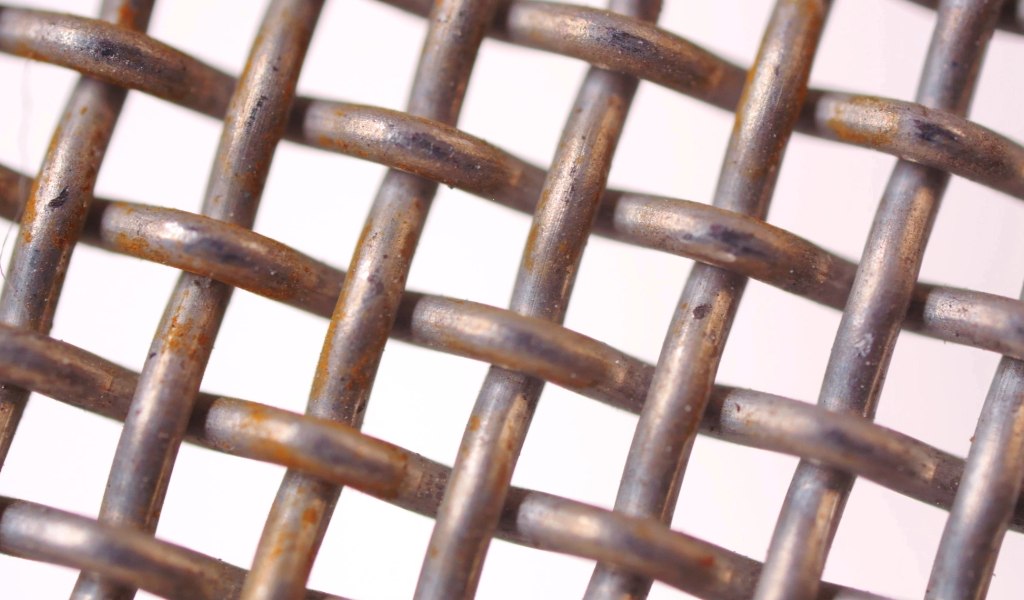
Industrial process water systems place extreme demands on internal components, particularly where aggressive chemistry and high particulate loads intersect.
For plant operations managers, process engineers, and facility maintenance directors overseeing critical fluid loops, selecting the correct structural material is the single most important decision in preventing premature equipment failure.
When a wire mesh filter operates in a corrosive stream, whether handling coastal seawater, chemical plant runoff, or high-temperature industrial blowdown, standard materials can suffer rapid pitting, intergranular attack, or stress corrosion cracking. These structural failures lead to torn screens, bypassed particulates, and expensive emergency shutdowns of downstream machinery.
Navigating the metallurgical landscape requires evaluating a wide spectrum of grades, ranging from baseline austenitic options like 316L and high-strength duplex steels to specialized chemical-resistant alloys such as Alloy 20, 904L, and super-austenitic 254 SMO.
However, choosing the highest-grade metal available without assessing actual environmental severity often leads to unwarranted capital expenditure.
This technical guide provides an objective framework for matching filter metallurgy to operating results. The following sections explore the primary chemical drivers of water corrosion, contrast the operational envelopes of key high-performance alloys, and outline essential mechanical factors to ensure optimal filtration longevity.
What Makes Water Environments Corrosive?
Industrial process water is rarely chemically inert. Understanding why certain fluid streams aggressively attack metal structures involves examining several interrelated chemical and thermal factors that compromise the passive chromium-oxide layer protecting stainless steel surfaces. These include:
- Chloride Concentration and Pitting: Dissolved chloride ions, common in coastal intake water, brackish wells, and cooling tower blowdown, actively break down passive protective films. This localized attack causes microscopic pits that can rapidly perforate thin wire mesh filter elements.
- pH Variation and Acidic Contamination: Process streams contaminated by mineral acids, chemical byproduct runoff, or acidic cleaning agents lower fluid pH, accelerating general metal loss and intergranular attack.
- Thermal Acceleration and Stagnation: Elevated operating temperatures exponentially increase electrochemical activity. Furthermore, stagnant zones in filtration housings permit localized concentration cells, driving severe crevice corrosion beneath trapped sediment.
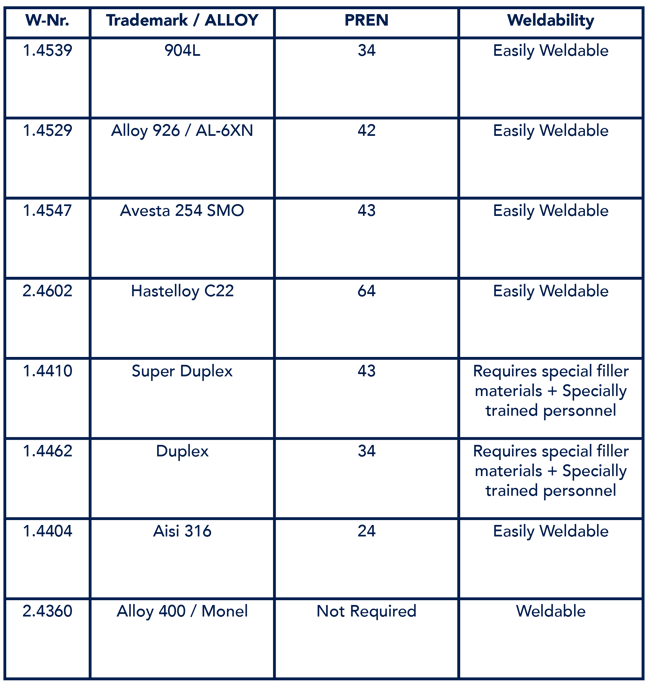
- Quantitative Indexing: Metallurgical engineers utilize the Pitting Resistance Equivalent Number (PREN) to model a grade’s resistance to chloride pitting, though factors like stress corrosion cracking and acid resistance require separate evaluation.
Recognizing these destructive mechanisms allows engineering teams to move beyond generalized assumptions and target the specific alloy required for their water filtration environment.
Comparing High-Performance Alloys for Corrosive Applications
Selecting the correct material for a wire mesh filter demands a direct comparison of metallurgical composition, mechanical limits, and cost-to-risk ratios across distinct alloy classes. Some options include:
- 316 Stainless Steel: Widely deployed as a baseline austenitic grade (PREN ~ 24-36), 316L offers dependable corrosion resistance in freshwater, light coastal atmospheres, and mild industrial water loops. However, it is vulnerable to chloride stress corrosion cracking and pitting in warm or moderately saline waters.
- Duplex Stainless Steels: Combining a dual micro-structure of austenite and ferrite, duplex grades deliver roughly double the yield strength of standard austenitic stainless steels alongside a higher PREN (~34-36). They excel in moderate chloride process streams and seawater-handling applications where higher mechanical strength is required to resist high differential pressure across fine filter screens.
- Alloy 20 & 904L: These specialized austenitic alloys are engineered to combat severe chemical attack. 904L features elevated nickel and molybdenum contents paired with copper, providing exceptional resistance to sulfuric and phosphoric acid streams. Alloy 20 is heavily stabilized for superior performance in hot, concentrated sulfuric acid environments.
- AVESTA 254 SMO: Classified as a 6Mo super-austenitic stainless steel with high chromium, molybdenum, and nitrogen contents (PREN > 40), 254 SMO is built for aggressive chloride-rich environments, desalination systems, and bleaching circuits where 316L or even 904L fails entirely. It resists both pitting and crevice corrosion in harsh marine conditions.
Why Wire Mesh Minimizes Maintenance Interventions
While evaluating corrosion resistance curves and PREN scores is critical, finalizing a wire mesh filter specification requires analyzing operational constraints that influence long-term structural reliability:
- Mechanical Strength and Fatigue: Filtration screens experience continuous hydraulic loading and periodic backwashing spikes. High-strength alloys like duplex stainless steels prevent screen ballooning or mechanical fatigue under intense differential pressure shifts without requiring excessively thick wire gauges.
- Fabricability and Weldability: Wire mesh filter elements require precision cutting, rolling, and seam welding. Alloys must maintain their corrosion resistance and structural integrity across heat-affected weld zones without suffering from carbide precipitation or sensitization. 254 SMO, for example, is generally easier to weld than Duplex stainless steels.
- Total Cost of Ownership vs. Initial Capital Expense: Specifying an advanced alloy like 254 SMO for a mild freshwater loop introduces unwarranted material costs. Conversely, installing 316L in an acidic wastewater stream guarantees premature failure and expensive downtime. Balancing the exact environmental severity against replacement labor costs determines true economic value.
If you want to learn more about the best specifications of wire mesh for your water filtration applications, read the article below:
When specifying super-austenitic grades like 254 SMO for sinter-bonded filter elements, manufacturing complexity rises significantly.
Due to the strict metallurgical parameters required for high-PREN materials, mesh suppliers struggle with interlayer delamination during the diffusion-bonding process, which compromises the screen’s structural integrity under high backwash pressures.
The duo-sintering procedure developed by HAVER & BOECKER successfully eliminates this risk, being the only provider on the market to do so. We can create fully integrated 254 SMO filter elements that maintain uncompromised mechanical strength in aggressive chemical environments.
Matching the Right Alloy to Your Water Environment
Securing long-term reliability in aggressive industrial water filtration systems depends entirely on aligning metallurgical selection with the exact chemical and thermal realities of your process stream.
Misjudging chloride levels or neglecting pH fluctuations can quickly compromise even the most robust wire mesh filter, turning a routine filtration step into a recurring maintenance bottleneck.
Conversely, specifying an ultra high-grade super alloy where a standard austenitic or duplex grade provides adequate corrosion resistance introduces unnecessary financial overhead. Engineering teams must weigh initial capital expenditure against potential downtime, maintenance labor, and replacement frequency to achieve true economic and operational balance.
Because no single alloy fits every industrial application, close collaboration between plant engineers and experienced filtration specialists is vital. Evaluating specific operating metrics, such as Pitting Resistance Equivalent Numbers (PREN) and cyclical pressure loads, ensures that the chosen filter element delivers optimum performance without over-engineering the system.
Backed by over 135 years of wire weaving excellence, HAVER & BOCKER partners directly with industrial facilities to engineer custom wire mesh filtration solutions tailored to severe fluid environments. By combining rigorous metallurgical expertise with precision manufacturing, HAVER & BOECKER helps operations teams maximize asset protection, reduce total cost of ownership, and maintain uninterrupted plant uptime.
Read our article below to discover more about the benefits of woven wire mesh filtration for your water treatment systems:


