.jpg?width=48&height=48&name=Dylan%20Polz%20(new).jpg)

In high-stakes laboratory and industrial processing environments, a well-optimized chromatography column operates with absolute predictability. Analysts and process engineers spend significant time calibrating mobile phases, choosing stationary resins, and programming precise gradients to ensure reliable separations. However, a truly high-performing column system is not only defined by chemical formulations, but it relies on a flawlessly balanced mechanical environment.
When every physical element inside the column works in perfect harmony, the system delivers sharp, reproducible data for every single run.
Understanding what an ideal separation looks like in practice allows technical teams to establish clear operational baselines. A top-tier column run consistently balances chemical interactions with controlled physical dynamics, minimizing baseline noise and preventing unexpected peak variations. When a system functions at this level, laboratories experience maximum product throughput, minimal chemical waste, and total confidence in their final analytical or preparative results.
As an established expert in industrial filtration and material science, HAVER & BOECKER pairs over 135 years of precision wire weaving expertise with an ongoing commitment to manufacturing cleaner, safer, and highly durable processing environments. Our engineering teams specialize in developing advanced fluid management components designed to withstand the strict demands of high-performance liquid chromatography. By manufacturing media with uncompromising tolerances, we help to provide the physical foundation needed to keep column internals structurally secure and completely reliable.
The article details the specific performance indicators that define a truly optimized chromatography system. We will analyze the core benchmarks of peak resolution metrics, explore how to maintain long-term system health with predictable pressure stability, and demonstrate how to achieve flawless form uniformity using advanced POROSTAR multi-layer laminate. Finally, we will show how integrating engineered wire mesh infrastructure helps your facility reach peak operational efficiency.
Benchmarks of Peak Resolution Metrics
The ultimate proof of a high-performing chromatography column is found in its raw data output. Peak resolution represents the column’s ability to cleanly separate two distinct target compounds as they pass through the stationary phase bed and hit the detector. In an ideal run, the resulting chromatogram displays tall, highly concentrated, symmetrical peaks that return completely to the baseline before the next compound emerges. Achieving this level of separation requires minimizing the natural spatial spreading of the sample band as it travels through the column matrix.
A highly efficient column maximizes the number of theoretical plates, meaning it provides an exceptionally dense environment for chemical interactions while keeping sample bands highly compressed. When a system meets these rigorous resolution benchmarks, analysts benefit from highly reliable tracking, even when handling complex, multi-component mixtures. Some of these benefits include:
- Symmetrical Gaussian Peaks: An optimized separation produces balanced peaks with an asymmetry factor close to 1.0, ensuring that integration software can calculate exact concentration areas without manual intervention.
- Complete Baseline Separation: Adequate spacing between eluted compounds eliminates overlapping signals, allowing for true peak purity and preventing the cross-contamination of fractions during preparative runs.
- Sharp Signal Response: Keeping the sample plug compressed concentrates the target molecules at the detector window, maximizing sensitivity and allowing the system to easily track low-concentration trace compounds.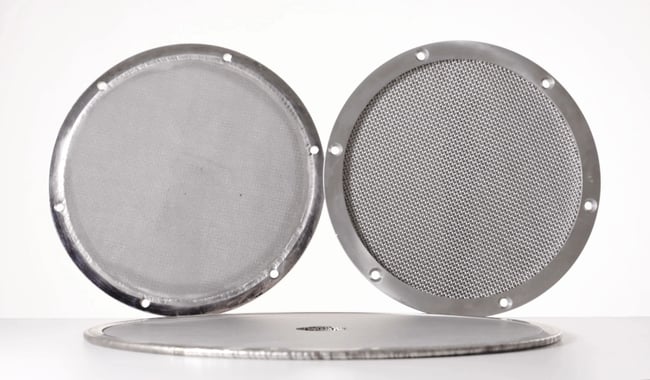
When a column consistently operates at peak resolution, it removes the guesswork from qualitative and quantitative analysis. Maintaining these pristine peak shapes relies entirely on preventing the sample band from warping or widening at the very beginning of its journey down the resin bed.
Maintaining System Health with Predictable Pressure Stability
While peak shapes confirm data accuracy, pressure stability acts as the definitive indicator of physical column health. During a standard separation run, the mobile phase is forced through the tightly packed resin bed under substantial force, creating a baseline backpressure. In a healthy, well-packed system, this pressure remains remarkably steady and predictable throughout the entire flow cycle.
This equilibrium indicates that the internal structural boundaries are holding firm, allowing the fluid to move through the matrix without encountering shifting resistance.
Uncontrolled pressure fluctuations or sudden spikes usually signal that the internal geometry of the column is breaking down. If the support structure or internal screen flexes under operational loads, the tightly packed resin beads shift out of place, altering the localized density of the bed. This structural movement causes localized compression zones that spike backpressure, overworking the system pumps and putting expensive column hardware at risk of physical failure.
To learn more about the analytical impacts of uneven fluid pathways in chromatography, read our previous article below:
Maintaining a predictable pressure stability requires an unyielding, rigid internal boundary that resists micro-deformations under continuous physical stress. Utilizing a flat, non-deformable wire mesh screen instead of a flexible porous plastic or fragile pressed-powder alternative keeps the boundary completely stationary.
This mechanical stability protects the uniform packing density of the resin bed, ensuring that backpressure remains consistent over hundreds of injection cycles, which ultimately keeps your fast-paced laboratory operations running smoothly.
Achieving Flawless Flow Uniformity via POROSTAR
The cornerstone of both high peak resolution and long-term pressure stability is true radial flow uniformity. For a column to achieve maximum separation efficiency, the incoming mobile phase must distribute evenly across the entire surface of the inlet the exact millisecond it enters.
To bridge the gap between irregular traditional materials and the strict demands of modern chromatography, HAVER & BOECKER engineered POROSTAR, a specialized multi-layer sintered wire mesh laminate designed for absolute fluid control.

Unlike conventional sintered powder frits, which feature a random network of unpredictable pathways, POROSTAR is built from individual layers of precision-woven stainless-steel cloth permanently bonded together. This intentional engineering brings complete geometric symmetry to the column inlet, upgrading system performance across all key operational benchmarks such as:
- Uniform Pore Geometries: Precision weaving ensures that every single opening across the POROSTAR screen is identical down to the micron, providing completely equal resistance to the incoming mobile phase.
- Elimination of Preferential Flow: Because fluid resistance is perfectly balanced across the entire surface, the liquid cannot seek a path of least resistance, effectively stopping the formation of high-velocity channels.
- Laminar Flow Realization: The structured, straight-through openings neutralize the incoming fluid velocity from the capillary inlet, transforming a turbulent stream into a perfectly flat, horizontal sample front.
By replacing random porosity with defined mesh openings, POROSTAR guarantees that every molecule in the sample injection travels at the same exact velocity. This level of physical control prevents sample plugs from deforming, resulting in exceptionally sharp peak resolutions and highly stable baseline pressures.
Reaching Peak Efficiency with Engineered Mesh Infrastructure
Transitioning a laboratory or production facility to standard-setting chromatographic performance requires a deliberate focus on the physical infrastructure inside your columns. Relying on software adjustments to patch up the visual symptoms of poor fluid distribution or shifting bed densities can only go so far. By choosing highly engineered, geometrically uniform wire mesh components, operations can definitively resolve the root mechanical causes of peak tailing, baseline drift, and unexpected system downtime.
Integrating high-performance multi-layer laminates like POROSTAR into your technical quality management workflow dramatically reduces the financial burden of repeated sample runs and ruined product batches. The structured rigidity and accuracy of a woven wire matrix prevents materials from bowing or shedding particles under intense operational forces. This unyielding physical stability maximizes equipment uptime, giving your analytical and production teams complete confidence in the reproducibility of their data.
At HAVER & BOECKER, we design and engineer advanced internal components to provide cleaner, safer, and completely dependable operations for high-precision facilities worldwide. Our over 135 years of manufacturing experience allows us to process high-grade stainless-steel wire into specialized multi-layer laminates that maintain their structural shape and pore geometries under continuous pressure. We focus on optimizing open area ratios and achieving absolute pore consistency so your facility can maintain flawless fluid control, protect capital investments, and keep your critical operations running smoothly.
To learn more about the structural factors and material flaws that disrupt these ideal system conditions, read more in our article below: