.jpg?width=48&height=48&name=Dylan%20Polz%20(new).jpg)
Attaining reliable analytical results requires steady, predictable fluid movements through the stationary bed phase. While scientists meticulously calibrate mobile phase velocities and temperature settings, the physical layout of the column inlet determines whether these parameters translate into accurate data. If the fluid front fails to disperse evenly across the column diameter, the separation process is compromised before the sample even interacts with the resin.
Identifying the structural factors that disrupt this initial distribution is the first step in protecting system performance.
When fluid enters a chromatography column, it must transition from a narrow, high-velocity inlet capillary into a wider, tightly packed resin bed. This transition relies on the internal distribution screen to spread the fluid front uniformly. If the screen fails to provide equal resistance across its entire surface, the fluid profile distorts, pushing the sample through unequal pathways. This imbalance introduces subtle, ongoing errors that complicate baseline readings and lead to expensive re-runs in high-stakes laboratory workflows.
As an established authority in industrial precision, HAVER & BOECKER pairs over 135 years of wire weaving expertise with a dedication to manufacturing cleaner, safer, and structurally reliable filtration environments. Our teams specialize in developing advanced fluid management solutions that eliminate the structural variances responsible for flow disturbances. By manufacturing porous media with strict micron-level tolerances, we provide liquid chromatography operators with the physical stability required to maintain flat, uniform flow fronts under continuous pressure.
In this article, we will examine the underlying material flaws and physical principles that cause poor fluid distribution inside chromatography columns. We will explore how fluids naturally navigate the path of least resistance, analyze why traditional porous frits introduce uneven flow velocities, and demonstrate how the uniform layer of POROSTAR eliminate preferential flow paths. Finally, we will outline how implementing precision engineered woven wire mesh optimizes overall column lifespan.
How Fluids Navigate through the Path of Least Resistance
The movement of liquids through a packed chromatography column is governed by fundamental fluid mechanics. When a mobile phase is pumped into the column head under pressure, it behaves according to the law of minimum energy expenditure, meaning it will always seek out the path of least resistance. In an ideal setup, the internal frit and the packed stationary phase present a completely identical, uniform resistance across the entire cross-section of the column, forcing the liquid to spread out and move at a single, consistent velocity.
However, if any microscopic region within the inlet assembly offers less resistance than the surrounding areas, the fluid dynamics change completely. Liquid molecules naturally divert toward the looser, more open pathway, gathering volume and velocity as they bypass tighter zones. This behavior changes a flat fluid front into an irregular, high-energy stream that alters the timing of the separation process.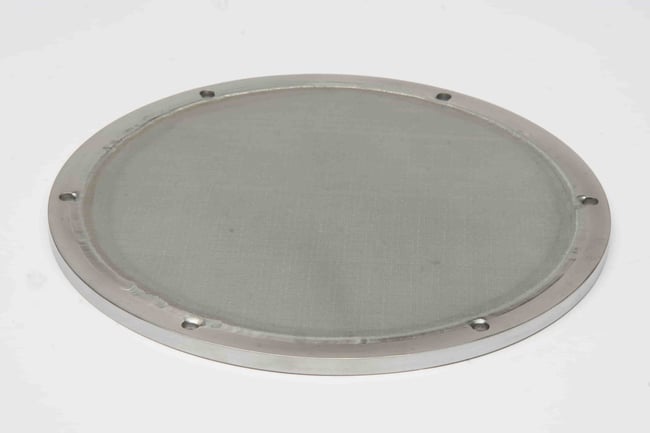
As the liquid crowds into these less restrictive areas, it creates localized velocity imbalances across the diameter of the column. The molecules traveling through the low-resistance pathways race ahead of the rest of the injection, causing a portion of the sample to contact the stationary phase prematurely.
This uneven velocity distribution prevents the sample components from migrating as a single, cohesive band, introducing physical variances that cannot be corrected by software adjustments or solvent modifications.
How Conventional Frits Introduce Uneven Flow Paths
The primary cause of variable resistance at the column inlet can be traced back to the manufacturing design of conventional frits. Traditional column screens are commonly made from metal powders or porous plastics, materials produced by pressing and heating irregular particles together until they fuse.
While this process creates a functional porous barrier capable of retaining resin beads, it inherently results in a chaotic, non-uniform internal structure with unpredictable fluid channels.
This random network of winding passages creates structural inconsistencies across the surface of the disc, leading to performance-limiting anomalies:
- Localized Density Variances: Sintered powders naturally cluster closer together in some spots and remain loose in others, producing random zones of high and low fluid resistance.
- Tortuous, Winding Pathways: The labyrinth-like tunnels force liquid to travel at different physical distances depending on which pore it enters, breaking up synchronization of the fluid front.
- Dead Zones and Edge Leaking: Irregular pore shapes can trap tiny volumes of fluid or allow liquid to channel down the outer margins where the frit meets the column wall.
To learn more about how physical hardware engineering supports high-throughput systems once your fluid dynamics are optimized, read our previous blog article below:
Because conventional frits lack geometric symmetry, they cannot deliver a truly balanced radical flow profile. The incoming mobile phase splits into a multitude of uneven flow paths, deforming the sample plug before it even reaches the resin bed.
Over time, these variable pathways cause uneven wear across the column, overworking specific areas of the stationary phase while leaving others underutilized, which quietly degrades total separation efficiency.
Eliminating Preferential Flow with POROSTAR Uniform Layers
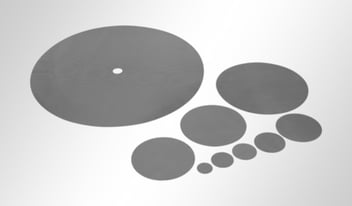
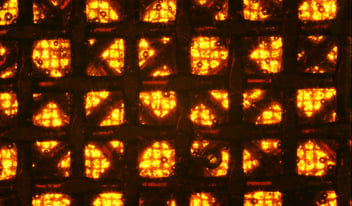
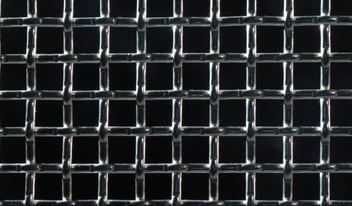
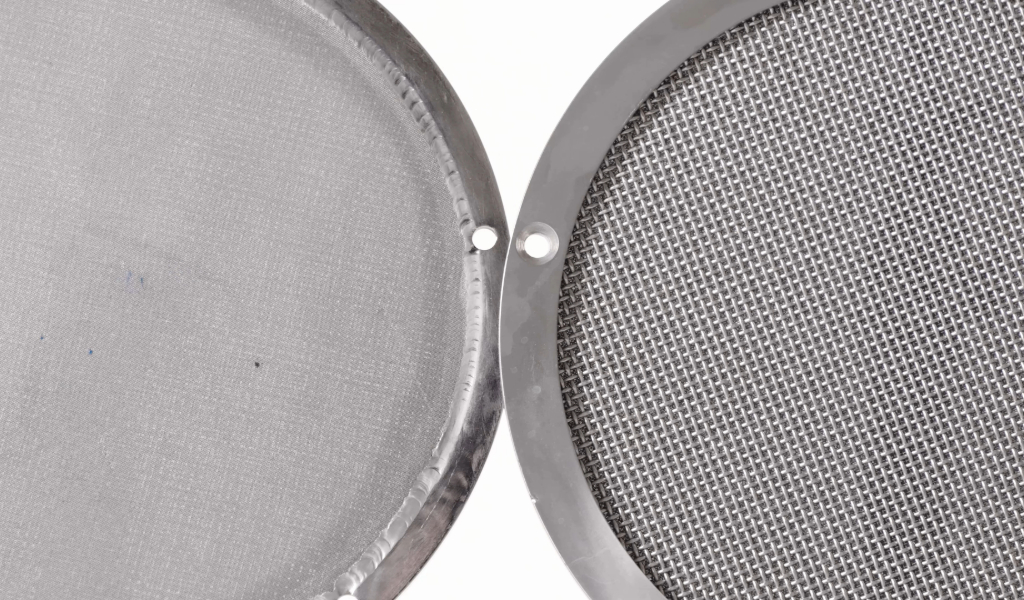
To overcome the unpredictable nature of conventional porous media, HAVER & BOECKER developed POROSTAR, a specialized multi-layer sintered wire mesh laminate engineered for precise fluid control. Unlike traditional sintered powders, POROSTAR is constructed from individual layers of precision-woven stainless-steel cloth that are permanently bonded together. This design replaces random, winding tunnels with an organized, three-dimensional porous structure featuring exact geometric symmetry.
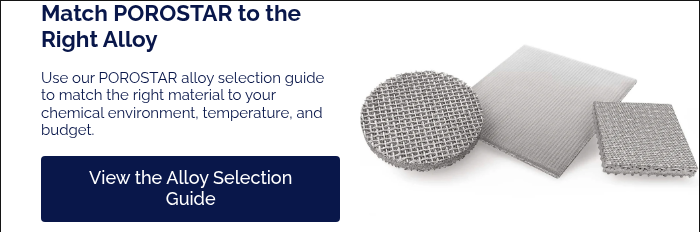
The core benefit of POROSTAR lies in its ability to eliminate preferential flow by establishing complete structural uniformity across every square millimeter of the screen. Because the openings in each woven layer are identical, the laminate provides perfectly equal resistance to the incoming mobile phase.
This identical resistance prevents the liquid from seeking a path of least resistance, forcing the fluid front to distribute evenly across the column face.
By maintaining a consistent open area and uniform pore depth, the multi-layer laminate acts as a built-in flow straightener. As the mobile phase transitions through the structured mesh layers, any localized turbulence from the inlet capillary is neutralized, creating a flat, laminar flow profile.
This precise mechanical control ensures that every molecule in the sample injection enters the stationary phase at the exact same velocity, protecting peak resolution and guaranteeing reproducible data.
Optimizing Column Lifespans Through Precision Woven Wire Mesh
Integrating precision woven wire mesh into chromatography columns not only safeguards your daily analytical accuracy, but it directly extends the operational life of the hardware itself. When fluid distribution is perfectly uniform, the physical forces pushing against the column internal components are spread evenly across the entire surface area. This balanced workload prevents the localized pressure spikes and high-velocity friction zones that accelerate material wear and tear in conventional setups.
Furthermore, the structural stability of an engineered laminate like POROSTAR prevents the screen from flexing or shifting under continuous system pressures. Maintaining a perfectly flat, rigid boundary ensures that the packed stationary phase resin stays securely contained and tightly compressed over hundreds of injection cycles. By eliminating the structural movement and preferential channeling that leads to resin bed collapse, laboratories can dramatically increase the functional lifespan of their columns.
At HAVER & BOECKER, we engineer advanced internal components to provide cleaner, safer, and highly durable operations for analytical facilities globally. Our over 135 years of wire weaving heritage allows us to design and manufacture multi-layer laminates, ensuring consistency and unyielding structural strength under operational loads. We focus on optimizing open area ratios and eliminating material defects so your laboratory can maximize equipment uptime, protect capital investments, and maintain flawless data continuously run after run.
To learn more about the analytical impacts of uneven fluid pathways in chromatography, read our previous article below: