.jpg?width=48&height=48&name=Dylan%20Polz%20(new).jpg)
Downhole sand control screens are the primary barrier protecting production tubing, pumps, and surface equipment from formation fines and formation sand influx. In unconsolidated reservoirs, failure to control sand production leads to severe downhole erosion, stuck completion assemblies, and catastrophic equipment failure.
Choosing between all-metal sintered wire cloth and synthetic filter media involves balancing upfront expenditure against long-term operational risk. While polymer-based or non-woven synthetic wraps find niche applications in low-temperature, low-pressure environments, their mechanical limits become clear in demanding completion zones. Exposed to high-temperature, high-pressure (HTHP) conditions, organic polymers soften, lose tensile strength, and degrade chemically when brought into contact with heavy aromatics, acidizing treatments, or hydrogen sulfide (H2S)
At HAVER & BOECKER, our POROSTAR porous sintered wire cloth laminates solve these material vulnerabilities by uniting multiple layers of precision-woven stainless steel or other high-grade alloys into a single, rigid sheet. The result is a filter media designed to withstand heavy mechanical loads while maintaining precise micron retention.
In this article, we examine the mechanical failure mechanisms of synthetic media downhole, detail how pore geometry influences sand retention and fluid resistance, outline the operational advantages of POROSTAR in abrasive reservoirs, and provide guidance for selecting sand control screens in harsh completion environments.
Mechanical Failure Risks of Synthetic Media Downhole
Synthetic filter media, which includes woven polymer fabrics, needle-punched non-wovens, and glass-fiber composites, are vulnerable to multiple physical failure modes when deployed in subsurface wellbores.
Exposed to elevated bottom-hole temperatures, high fluid velocities, and aggressive completion chemistry, polymeric materials experience rapid mechanical degradation that compromises wellbore sand retention.
Key mechanical failure mechanisms include:
- Thermal Softening and Creep: Polymeric fibers lose structural stiffness at elevated bottom-hole temperatures. Under sustained formation pressure, individual synthetic fibers creep and compress, closing off active flow channels and severely restricting hydrocarbon inflow.
- Chemical Degradation and Embrittlement: Exposure to aggressive completion fluids, hydrocarbon solvents, and chemical stimulation treatments breaks down organic polymer bonds, making the media brittle and prone to cracking under fluid pressure surges.
- High Differential Pressure Tearing: Unsupported synthetic layers lack the tensile strength required to bridge support drainage slots under high differential pressure. Once a tear forms, fluid sweeps through the breach, creating a low-resistance path for sand to bypass the screen entirely.
- Fiber Shedding and Downstream Plugging: Under high-velocity fluid drag, unbonded synthetic fibers can detach from the matrix and migrate downstream, fouling valves, control lines, and artificial lift components.
Check out the article below to discover more about the strengths of long-lasting filtration:
Because these failure modes occur deep within the completion zone, operators typically discover synthetic media breakdown only after formation sand begins eroding surface production equipment or choking the wellbore.
How Pore Geometry Controls Sand Production and Fluid Drag
The hydrodynamics of sand control depends entirely on maintaining stable pore apertures within the filter medium.
Ideal sand control media must form a stable, permeable bridge of sand grains across its outer surface without allowing fine particles to lodge within the filter matrix itself.
Rigid vs. Deformable Pore Channels
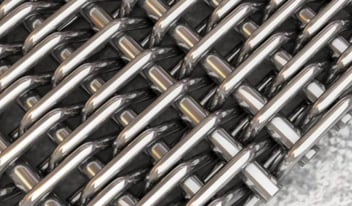
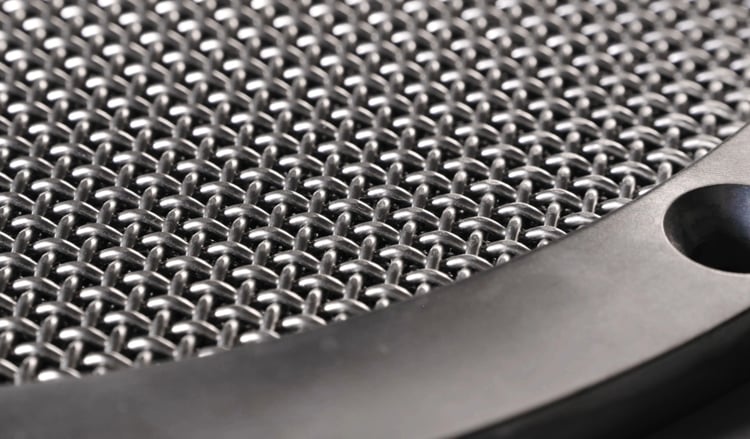
POROSTAR sintered wire mesh features fixed, rigid pore openings engineered into a multi-layer metallic framework. Because the wire intersections are metallurgically welded through diffusion bonding, the pore openings remain dimensionally stable under severe compaction loads and fluid velocity spikes.
In contrast, flexible synthetic fibers bend and shift under fluid shear, constantly altering effective aperture sizes and allowing out-of-spec formation fines to pass.
Minimizing Fluid Drag and Inflow Resistance
Fluid drag across a sand screen directly impacts production drawdown. Sintered wire mesh laminates maximize open surface area within a compact wall thickness, creating low tortuosity for passing fluids.
Deformable synthetic fabrics, when compressed under formation pressure, form dense, compacted matrices that increase fluid resistance, driving up pressure drop across the completion string and restricting flow rate.
POROSTAR Performance Advantages in Abrasive Reservoirs
In highly abrasive reservoirs characterized by angular quartz sand and high fluid production rates, POROSTAR sintered wire mesh delivers mechanical durability and filtration accuracy that synthetic alternatives cannot replicate.
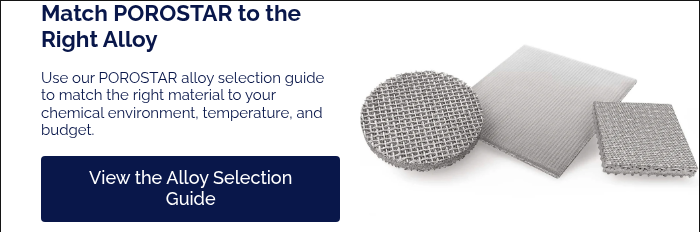
Key Performance Advantages Include:
- Solid-State Diffusion Bonding: Multiple layers of precision-woven stainless steel wire cloth (ranging from protective outer shrouds to fine filtration weaves and heavy structural support layers) are sintered at high temperature and pressure. This fuses every wire contact point into a single, monolithic plate with zero chance of layer separation or wire shifting.
- Absolute Retention Reliability: POROSTAR maintains precise pore size ratings that allows engineers to match screen retention strictly to formation particle size distribution (PSD) analysis.
- High-Alloy Corrosion Resistance: Fabricated in standard 316L, or specialized alloys such as Alloy 20, Hastelloy, and Inconel, POROSTAR resists pitting, crevice corrosion, and stress corrosion cracking in sour or saline environments.
- Erosion and Impact Protection: Heavy outer wire mesh layers act as sacrificial armor, absorbing the kinetic energy of high-velocity sand jets before they reach the primary filtration layer.
- Backwashing and Cleanout Capability: Unlike depth-style synthetic media that trap particles permanently within their interior matrix, POROSTAR features a controlled surface-filtration geometry that responds well to fluid backflushing and chemical cleanouts during well workovers.
Selecting the Right Sand Control Screen for Harsh Wellbores
Selecting sand control media requires looking beyond initial purchase price to consider long-term reservoir performance, workover risks, and total production yield. While synthetic filter media may appear cost-effective for shallow, low-temperature water wells or benign environmental applications, deploying them in high-value oil and gas completions introduces unacceptable mechanical risks.
Specifying diffusion-bonded sintered wire mesh laminates protects completions against sand influx, structural collapse, and fluid channeling. By maintaining fixed pore geometries under extreme pressure and temperature regimes, engineered metal media safeguards production hardware and supports maximum reservoir recovery.
At HAVER & BOECKER, we engineer custom POROSTAR sintered wire mesh structures tailored to complex downhole completion requirements. Our team collaborates directly with completion engineers to evaluate formation sand profiles, fluid chemistry, and mechanical stress parameters to deliver sand control screens built for long-term wellbore reliability.
Having troubles with your downhole filters? Read our article below to learn more about how to fix unplanned system shutdowns in your process: