.jpg?width=48&height=48&name=Dylan%20Polz%20(new).jpg)
In aggregate production, mining operations, and industrial mineral processing, plant managers constantly navigate the tension between hourly production volume and strict product specification. At the center of this challenge sits screen media selection. Every vibrating screen section operates within fixed physical dimensions; therefore, every square inch dedicated to solid wire mass is space unavailable for material separation. Understanding how mesh openings influence passing velocity and bed depth is essential for eliminating plant bottlenecks.
When aggregate feeds onto a screen section, particles must rapidly stratify, which is when coarser rocks rise to the top while finer particles sink toward the wire surface. If the percentage of open area is too low, fines cannot pass through fast enough near the feed box. This creates an overly thick material bed that cushions smaller aggregate, preventing fines from reaching the apertures before the material discharges into the oversize pile. Conversely, increasing open area by reducing wire diameter increases passing capacity but risks rapid wear or structural panel fatigue under high-impact loads.
At HAVER & BOECKER, our over 135 years of wire weaving development have shown that optimizing throughput requires evaluating the entire operational circuit. By precision-drawing high-tensile wire and engineering specialized screen section solutions, we manufacture high-quality woven wire media that delivers maximum active open area while maintaining structural integrity against severe abrasion.
This article details the mathematical relationship between open area percentage and hourly tonnage, breaks down how wire gauge selection influences panel wear life, and examines specialized slotted weave geometries engineered to maximize material flow rates.
The Direct Link Between Open Area and Processing Tonnage
Open area percentage represents the ratio of total aperture space to the total surface area of a woven wire screen section. Mathematically, it dictates the maximum volume of material that can physically pass through a panel per hour under specific vibration parameters.
Higher open area percentages allow particles near the cut size to pass through immediately upon contacting the wire surface, dramatically increasing separation speed.
When open area is maximized, material stratifies efficiently across the first third of the screening panel. Fines fall through the openings quickly, leaving a thinner, more manageable bed of near-size material across the remaining length of the section.
This rapid separation prevents material backup, allowing operators to increase feed rates without risking product contamination in the oversize stream.
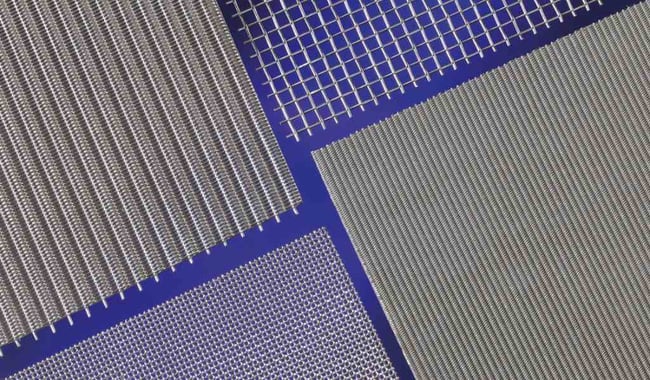
When a screen section lacks adequate open area, the passing velocity drops. Material builds up into a deep, heavy bed that travels slowly across the panel surface.
Fines trapped at the top of a thick bed cannot migrate downward through the tumbling rock layer before reaching the discharge end. This carryover forces usable, spec-ready fines into secondary crushers or coarse product stockpiles, creating unnecessary recirculating loads that consume excess power and artificially cap overall plant capacity.
Balancing Wire Diameter, Aperture Size, and Wear Life
Maximizing open area is not as simple as selecting the thinnest wire available.
Every screening application requires a precise engineering balance between wire diameter, aperture size, and structural longevity.
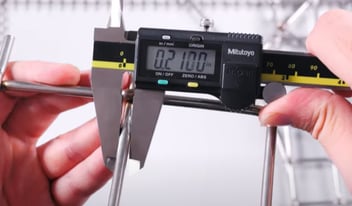
Choosing a heavier wire gauge increases the total mass of steel available to absorb abrasive wear and heavy aggregate impact, extending the operating lifespan of the panel.
However, thicker wires physically occupy more space on the screen surface, directly reducing the percentage of active open area and lowering total hourly throughput.
Want a complete look at how panel wear, aperture stretching, and structural fatigue impact overall plant throughput? Check out our guide below to learn more:
Conversely, specifying a finer wire diameter expands the clear space between wire intersections, yielding a significant bump in open area and passing capacity.
The trade-off comes in wear resistance, as thinner wires possess less cross-sectional area to withstand continuous friction from sharp ore, gravel, or stone.
Under heavy loading, fine wire panels can experience accelerated surface wear, sagging, or premature wire breakage along support bar lines.
To navigate this trade-off effectively, process engineers must evaluate the specific deck position and feed characteristics.
Impact zones near the feed box often benefit from heavier wire gauges or specialized alloys to resist initial drop force, while downstream screen sections, which is where bed depth is thinner and stratification is established, can utilize finer wire diameters to maximize final product sizing and throughput.
Engineered Weave Styles That Maximize Flow
Standard square mesh weaves maintain equal wire spacing in both directions, providing consistent sizing accuracy.
However, in high-tonnage processing applications or difficult screening environments, specialized slotted weave geometries re-engineer the surface topology to significantly boost open area percentage without sacrificing structural wire mass.

HAVER & BOECKER manufacturers two core slotted wire media solutions designed to maximize throughput and maintain high material flow rates:
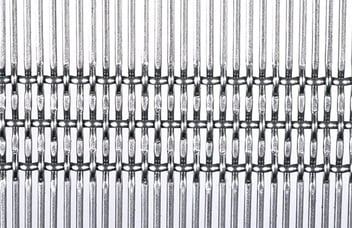
- Ty-Rod: Engineered with long, continuous parallel openings aligned with material flow, Ty-Rod delivers maximum active open area by eliminating a large percentage of cross-wire intersections. This expanded open space accelerates passing velocity and prevents damp fines from bridging, while the natural elasticity of parallel wires generates micro-vibrations that keep high-volume material streams moving at peak capacity.
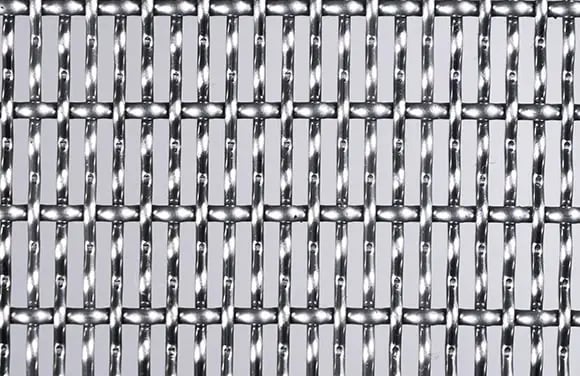
- TON-CAP: Featuring elongated rectangular apertures combined with heavy-gauge cross wires running transverse to material flow, TON-CAP provides an optimal balance between open area percentage and structural load resistance. The rectangular geometry allows fine particles to pass quickly while preventing heavy, cubical rock from loading into the mesh, maximizing tonnage in high-impact screening circuits.
Deploying specialized weaves like Ty-Rod and TON-CAP allows producers to expand active open area, increase hourly throughput, and eliminate carryover bottlenecks without compromising panel durability.
Optimizing Your Screening Circuit for Peak Efficiency
Achieving maximum throughput requires treating screen media selection as a precision engineering decision rather than a commodity purchase. By understanding how open area percentages, wire diameters, and aperture geometries interact, plant operators can eliminate processing bottlenecks and maintain high hourly tonnage.
Balancing durability with passing capacity depends on matching wire cloth specifications to your exact material characteristics, which includes drop height, particle sharpness, moisture levels, and feed rate. Deploying engineered weave styles and strategic wire gauges across your screen sections protects panel service life while ensuring fines drop out of the circuit as efficiently as possible.
At HAVER & BOECKER, we design high-tensile woven wire screen media engineered for maximum open area, precise separation accuracy, and extended service life. By controlling wire metallurgical tolerances, crimp precision, and panel edging systems, we help producers protect their processing equipment, eliminate carryover losses, and maintain peak plant profitability.
Looking for a deeper review of the negative effects of blinding and pegging in your vibrating screen sections? Read our article below to learn more: