.jpg?width=48&height=48&name=Dylan%20Polz%20(new).jpg)
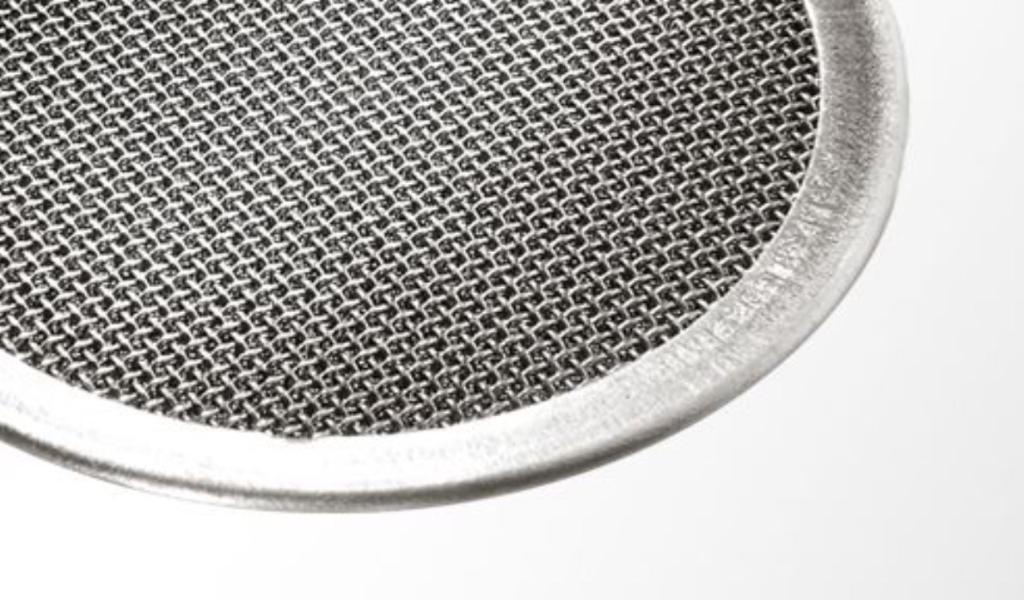
Keeping your fluid velocity steady and getting sharp, clean peaks is a constant challenge in busy testing and production labs. When a proven testing method starts showing wide peaks, a drifting baseline, or high backpressure, it is easy to assume the issue is with your chemical mix or solvent quality. However, small physical problems inside the column hardware are often the real, hidden causes of system downtime. Minor structural failures within the internal support screens mess up how fluids flow through the system, causing samples to spread out unevenly and slowing down your entire testing schedule.
To clear up these everyday bottlenecks, you need to look closely at the boundary layer where the liquid or gas mobile phase enters the stationary phase resin. Creating a smooth, completely uniform flow prevents physical shifts inside the column bed, which keeps your separations highly efficient. Investing in high-quality column internals and guard systems lets you protect your expensive stationary phase materials, lowering your overall cost-per-injection while keeping your instruments running longer.
As a trusted partner in precision wire weaving, HAVER & BOECKER combines 135 years of industry experience with a strong commitment to making separation processes cleaner, safer, and more reliable. By holding our mesh tolerances to exact micron levels, we help operations maintain strict process control, protect delicate samples, and keep downstream systems free from contamination.
This article takes a look at the physical failures that disrupt column fluid dynamics. We will break down the structural root causes behind poor peak resolution, trace the factors that cause unpredictable pressure changes, and show how better bed support designs stop fluid channeling and costly resin loss.
Resolving Poor Resolution and Signal Drift
Chromatographic resolution depends on getting sharp, separate peaks as your sample compounds rinse through the packed resin bed. When your resolution drops or your baseline signal starts to drift widely, the problem usually comes down to band broadening, which is the physical spreading of your sample zone as it moves through the column. This peak spreading happens when your fluid front does not enter the stationary phase evenly across the entire column face. This forces molecules of the same compound to take unequal paths, resulting in wide, overlapping peaks that make accurate calculations difficult.
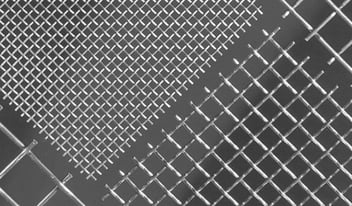
To stop this spreading at the column entrance and exit, the shape and style of the bed support is incredibly important, especially its open area percentage. The open area is simply the ratio of open wire space to the solid surface of the filter or frit. If the open area is too restricted, or if the pore sizes are uneven, it forces the fluid to shoot through the screen at high speeds in specific spots. This jetting effect creates turbulent swirling right at the edge of the resin bed, distorting your sample plug before the separation even gets started.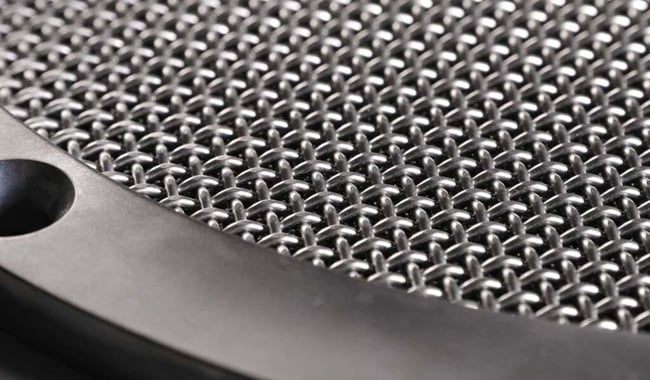
Keeping a high open area with an exact, uniform grid pattern ensures a smooth, even fluid transition across the full diameter of the column. A larger open area means there is less physical metal blocking the fluid path, which allows the sample stream to distribute evenly across the front of the stationary phase. This uniform flow keeps the path lengths identical for your sample molecules, ensuring they travel together through the column in tight, narrow bands.
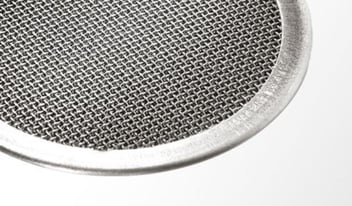
Additionally, using screens with a highly controlled open area helps eliminate “dead volume” zones, where stagnant fluid can get trapped. These dead zones let sample molecules drift backward against the main flow, causing long peak tails and baseline drift that looks like chemical contamination. By ensuring consistent wire diameters and tight pore spacing, custom-woven wire mesh solutions such as POROSTAR deliver an optimized flow profile that guarantees:
- Smooth Fluid Entry: Eliminates high-velocity jetting spots to keep the sample injection flat and uniform.
- Zero-Dead-Volume-Design: Eradicates the tiny physical pockets where trapped samples cause peak tailing and baseline drift.
- Sharper Peak Separations: Maximizes your system’s peak capacity, letting you cleanly resolve more compounds in a single run.
Why Open Area Controls Drainage and Vacuum Efficiency
Unpredictable pressure changes are a major threat to both your lab’s data consistency and the lifespan of your stationary phase. In systems like HPLC and FPLC, keeping a perfectly steady flow rate is required to get reliable retention times. When your system hits sudden pressure spikes or chronic pulsing, it changes how fast the mobile phase moves through the bed. This directly throws off your elution windows, which confuses automated peak-reading software and forces you to spend valuable time manually recalibrating your instruments.
The physical stability of your internal bed support or frit directly sets the baseline pressure of the system. Standard porous metal frits are often full of irregular, winding pathways that easily trap fine debris and dried buffer salts. As these microscopic blocks pile up inside the tortuous pores, flow resistance climbs quickly, driving up your system’s backpressure. This restriction forces your pumps to work much harder, which wears out pump seals ahead of schedule, causing check-valve failures, and triggers unexpected system shutdowns.
Want to learn more about the connection between durability and flow in your pulp & fiber systems? Check out our article below to learn more:
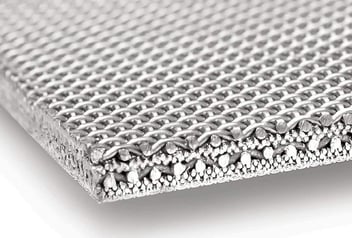
To prevent these pressure issues, your column filtration needs to use a pore structure that lets fluid pass easily while still offering rigid structural support. Woven wire mesh is engineered with a straight-through geometric pore layout that has no internal dead-ends or winding paths.
This filtration design allows complex biological samples or high-salt buffers to rinse through with minimal pressure drops, stopping the premature clogging that causes pressure adjustments.
On top of that, the bed support must resist bending or squishing under the heavy pressures used in modern separation. If a support screen flexes under load, the volume of the packed resin bed shifts, changing the internal spacing and causing immediate pressure variations. Using a rigid, calendared stainless-steel mesh ensures the boundary layer stays perfectly flat and structurally sound under continuous pressure, keeping your retention times stable and protecting your pump parts from early wear.
Preventing Channeling and Resin Media Loss
Channeling and resin media loss are serious mechanical failures that can permanently ruin a chromatography column’s performance. Channeling happens when the mobile phase finds a path of least resistance through the packed bed, creating fast micro-streams that shoot past the bulk of your stationary phase resin.
This bypass destroys your mass transfer balance, leading to split peaks, crooked peak shapes, and a total loss of separation power. Channeling almost always starts because of uneven flow distribution at the inlet or physical shifts in the underlying bed support.
If your support screen has weak spots or changing pore sizes across its surface, it creates different fluid speeds in different areas of the column. Over time, these speed differences cause the packed resin bed to shift and crack, forming physical gaps and holes inside the packing structure. Once a gap forms, the fluid naturally rushes straight into that space, quickly eroding the surrounding resin bed. To protect your column packing, the support structure must provide completely equal flow resistance across every single square millimeter of its surface.
The other major consequence of a failing support structure is the migration and loss of your stationary phase media. In preparative and industrial chromatography, micro-fine resin beads are a massive financial investment. If the pore openings in your retention screen have variations that are larger than your smallest beads, those resin particles will bleed right through the support layer. This strategy media loss lowers your overall bed height over time, reducing your column’s capacity and leaving permanent voids at the top of your bed.
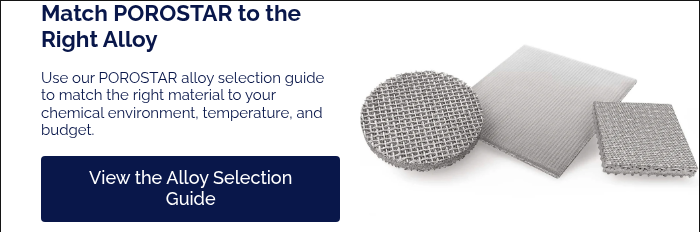
Worst yet, escaping resin particles travel down the line and pose a severe contamination risk to the rest of your analytical equipment. These stray particles can quickly clog detector flow cells, ruin multi-port valves, and ruin your final purified product. Using a highly precise woven wire mesh filter such as POROSTAR, with a verified, non-deformable micron rating ensures total retention of your stationary phase media because of:
- Even Flow Distribution: Forces an identical fluid velocity across the entire bed cross-section, cutting off the starting points of fluid channeling.
- Total Particle Containment: Tight, micron-rated pore tolerances guarantee that fragile spherical resin beads cannot leak out.
- Downstream System Protection: Stops stray media from migrating into delicate downstream valves, detectors, or finished product lines.
Safeguarding Your Lab’s Throughput and Accuracy
Fixing chronic chromatography bottlenecks means looking past basic chemical adjustments and fixing the physical fluid dynamics inside your column hardware. Fixing poor peak resolution, taming erratic pressure changes, and stopping fluid channeling are all deeply tied to how well your bed supports and filtration components perform. When these internal structures flex or allow uneven flow, they cause a chain reaction of testing errors that slows down your lab’s entire operation. Replacing variable, lower-quality internals with high-precision, geometrically verified support systems gives you a new level of data consistency and process reliability.
Checking the physical health and specifications of your column internals should be a regular part of your lab’s preventative maintenance and method setup. Inspecting inlet frits for flatness, verifying your open area percentages, and choosing support screens woven specifically for your exact resin bead size will drastically cut down on unexpected column failures. Switching to single-layer, non-clogging filtration media allows your instruments to run longer between cleaning cycles, protecting your expensive stationary phases and eliminating the need for frequent, frustrating sample re-runs.
At HAVER & BOECKER, we rethink the separation environment to provide cleaner, safer, and completely dependable process loops for labs worldwide. Our 135 years of manufacturing heritage allows us to turn high-grade stainless-steel wire into specialized, micron-precise distribution components that handle aggressive mobile phases and heavy pressures with ease. We focus on maximizing open areas and tightening structural tolerances so your lab can achieve uncompromised analytical throughput, keeping your critical data accurate and your processes scaling safely.
To learn more about optimizing your systems filtration efficiency and managing fluid resistance, explore our analysis on balancing fluid dynamics below: