
.jpg?width=48&height=48&name=Dylan%20Polz%20(new).jpg)
High-density AI computing clusters generate unprecedented thermal loads, driving data center infrastructure away from traditional air cooling toward direct-to-chip liquid cooling architectures. At the center of this transition sits the Coolant Distribution Unit (CDU). The CDU decouples the primary Facility Water System (FWS) loop from the secondary Technology Cooling System (TCS) loop, isolating high-value IT gear while maintaining tight temperature, flow rate, and pressure parameters.
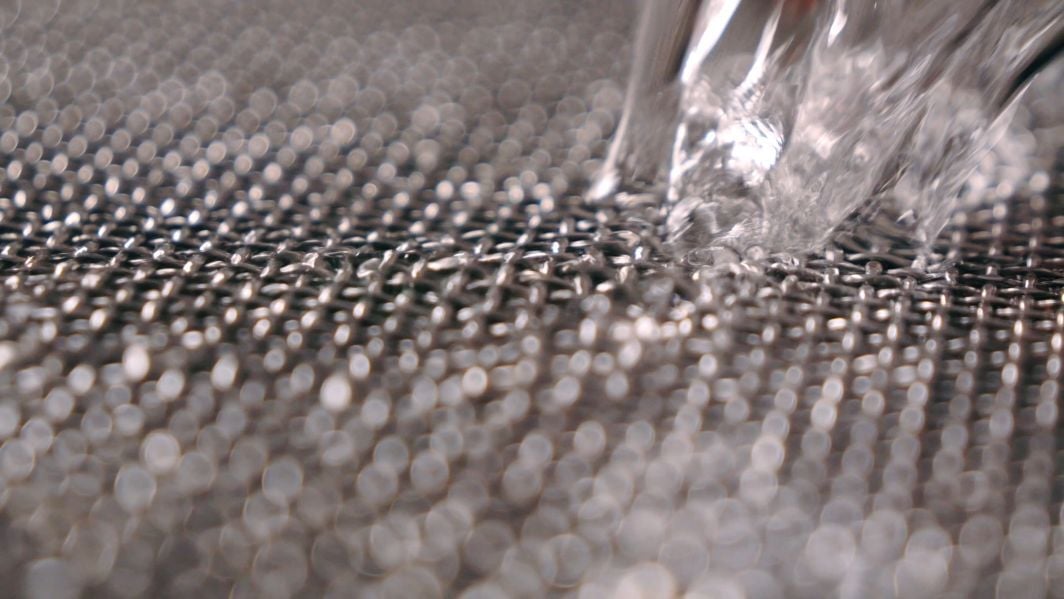
Protecting CDU heat exchangers and pump impellers requires disciplined fluid management. A critical line of defense within the secondary loop is the inline sock screen filter, which is a specialized woven wire mesh component designed to trap physical debris before fluid enters sensitive equipment. Selecting the appropriate micron rating for this mesh directly dictates system reliability.
HAVER & BOECKER provides precision-engineered woven wire mesh solutions tailored specifically to the rigorous demands of data center liquid cooling. By leveraging decades of wire mesh manufacturing expertise, HAVER & BOECKER supplies durable, high-integrity sock screens and filter media that deliver exact pore openings and dependable hydraulic efficiency across critical secondary cooling units.
This article explores how micron ratings impact secondary loop performance, key particulate, failure modes in CDU microchannels, and how proper mesh selection balances debris retention with optimal fluid flow.
The Role of Micron Ratings in AI Data Center Liquid Cooling
A micron rating defines a filter’s ability to remove particles of a specific size, measured in micrometers (μm). In a closed-loop TCS, the fluid must continuously circulate through tight spaces without accumulating suspended solids.
Selecting the ideal micron rating requires balancing mechanical protection against system hydraulics:
- In-Rack CDUs: Typically utilize a tight 25 μm filter rating to match compact heat exchangers and lower flow demands.
- In-Row CDUs: Generally standardize on 50 μm filter rating to balance higher volume flow rates with particle retention.
- Side-Stream Polishing Circuits: Run small bypass loops (5% to 10% of total flow) through as small as 5 μm wire mesh filters such as RPD HIFLO® for ultra-fine cleanup.
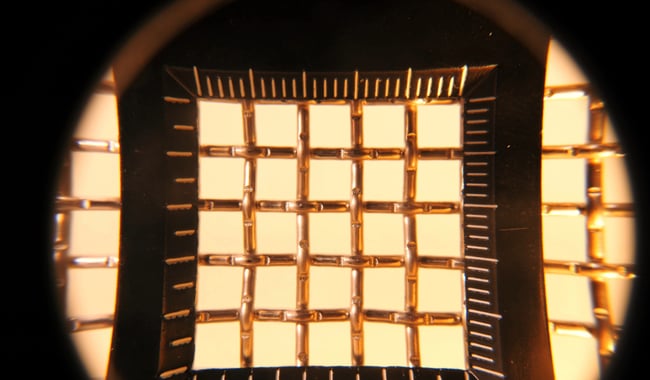
Specifying an overly tight micron rating directly into the primary TCS flow path (such as attempting full-flow 1 μm filtration with standard mesh.) creates significant operational drawbacks. Fine mesh creates a high initial pressure drop, requiring increased pump horsepower and energy consumption.
Furthermore, ultra-fine media loads rapidly with normal debris, causing frequent filter blind-offs and triggering unnecessary maintenance cycles.
Engineers must choose between nominal ratings (capturing 85%-95% of particles at the rated size) and absolute ratings (retaining more than 99.9% of particles at that threshold). For secondary loop sock screens, nominal woven wire mesh provides the exact geometric aperture control needed to catch rouge construction debris, pipe scale, and metal shavings while preserving maximum flow area.
Protecting Microchannels and CDUs from Particulates
Modern AI accelerators, such as GPUs and high-density ASICs, transfer thermal energy using cold plates equipped with internal microchannels. These microchannels feature gap widths ranging from 50 μm down to 100μm to maximize surface area contact with the coolant.
When unmanaged particulate matter circulate through the secondary loop, several failure modes occur:
- Microchannel Occlusion: Particles approaching or exceeding 50 μm lodge directly in cold plate channels, starving individual channels of fluid and causing immediate localized thermal spikes across the processor die.
- Erosive Wear: Solid particulates traveling at high velocity create an abrasive slurry, eroding internal pump impellers, valve seats, and delicate cold plate internal fins over time.
- Heat Exchanger Fouling: Fine particles deposit along the internal surfaces of the CDU brazed plate heat exchanger, forming an insulating film that degrades total heat transfer.
Looking to discover more about how woven wire mesh solutions can help your water filtration performance? Check out our article below to learn more:
Woven wire mesh sock screens act as a last-chance physical barrier installed directly upstream of sensitive hardware.
Unlike depth-filter cartridges that can shed fibers or deform under high pressure drops, precision-engineered stainless steel wire mesh retains structural integrity under fluctuating pressure differentials, holding its pore geometry constant.
Mitigating Fine Particulates and Biofouling
While sock screens stop coarse solids and construction debris, secondary cooling loops also contend with contaminants, organic matter, and biofouling.
Understanding particle behavior helps define where mesh sock screen filters end and chemistry or polishing filters begin:
- Coarse Debris and Scale (>50 μm): Pipe scale, welding slag, and installation debris cause immediate microchannel clogging and flow starvation. These are primarily controlled using TCS inline woven wire mesh sock screens (25-50 μm).
- Fine Suspended Solids (5 μm to 50 μm): Metal oxides, pump wear debris, and atmospheric dust induce gradual fouling, surface abrasion, and increased fluid drag. Mitigation relies on secondary inline mesh filters paired with primary FWS strainers.
- Biological Contaminants: Microscopic organisms foster biological in water/glycol mixtures, leading to biofilm formation, biofouling, and microbially induced corrosion (MIC). Treatment involves biocide dosing alongside sterile side-stream media filters.

Biofilm formation presents a distinct challenge in water-glycol and treated water loops. Bacteria colonies adhere to metallic surfaces, creating a slimy matrix that traps micro-particles.
If left unchecked, this biofilm acts as a thermal insulator far worse than copper or aluminum oxide, quickly causing thermal throttling on AI servers.
Mechanical mesh filtration cannot replace chemical fluid maintenance but instead filtration elements such as wire mesh sock screens protect the system while biocide dosing and side-stream polishing clear organic components.
Secure AI Cooling with Precision Woven Wire Mesh
Maintaining liquid-cooled AI data centers requires a layered strategy. Inline sock screens made from 316L stainless steel woven wire mesh provide the exact pore uniformity, mechanical strength, and corrosion resistance needed to defend CDU loops and cold plate microchannels from catastrophic debris. By specifying the correct target micron rating, which is typically 25 μm to 50 μm for secondary TCS loops, engineers achieve optimal particulate protection without introducing excessive fluid resistance or pump energy losses.
Deploying high-quality woven wire mesh filters significantly mitigates systemic risk across high-density cooling loops. By catching abrasive solids before they reach internal pump components or narrow microchannel cold plates, facilities maintain steady thermal transfer performance and avoid unplanned downtime. This mechanical protection forms the foundational baseline for long-term liquid cooling operational integrity.
HAVER & BOECKER works alongside thermal management engineers to design and produce high-performance woven wire mesh filtration components tailored to custom specifications. With a commitment to precise aperture control and premium alloy fabrication, HAVER & BOECKER helps data center operators safeguard critical infrastructure against costly thermal interruptions.
Check out our article below to learn more about wire mesh sock screens and how they can benefit your data center performance: