

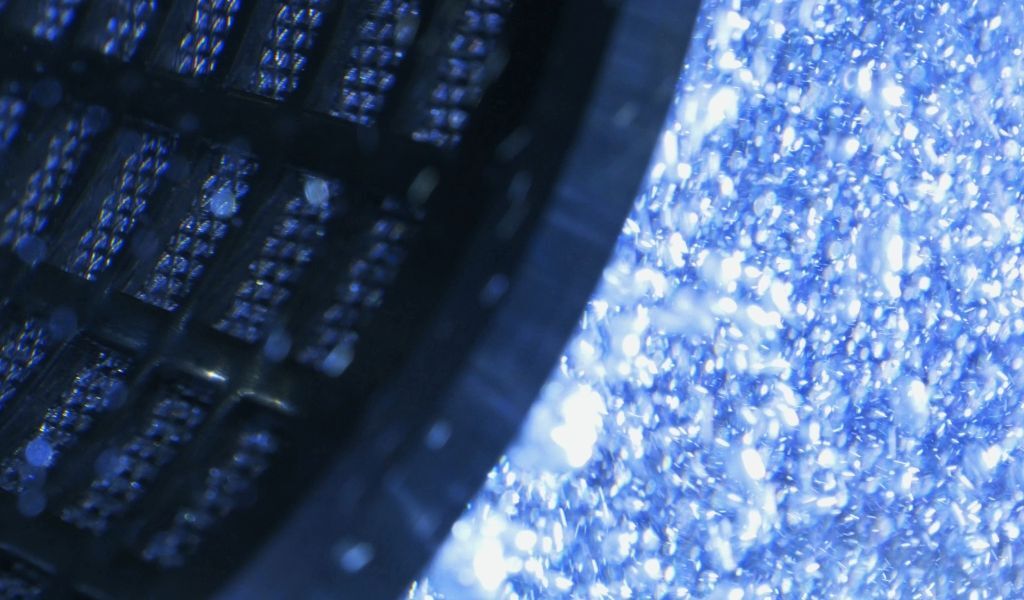
Every industrial water strainer generates a predictable baseline pressure loss as fluid passes through its housing and screen element.
For specialists in the field such as plant maintenance supervisors, process engineers, and water system operators, a sudden or steady climb in differential pressure across that strainer serves as an immediate warning sign that system hydraulics or solids loading have shifted out of balance.
Left unresolved, excessive pressure drop starves downstream heat exchangers, spray headers, and cooling loops of required flow volume. It also forces upstream booster pups to work harder against rising discharge resistance, wasting electrical energy and placing dangerous mechanical strain on the strainer basket or cylinder itself.
Pinpointing why differential pressure is climbing requires separating normal debris accumulation from deeper mechanical, biological, or hydraulic problems.
Whether a facility operates manual duplex baskets or automated self-cleaning units fitted with a wire mesh filter, isolating the root cause quickly prevents screen collapse and unplanned line shutdowns.
This troubleshooting guide provides operations and maintenance teams with a structured diagnostic approach to high pressure drop in industrial water strainers. The sections below identify the primary operational culprits behind pressure spikes, walk through a logical field inspection sequence, and detail corrective engineering fixes to restore stable system flow.
Common Causes of Water Strainer Pressure Drop
While heavy solids loading is the most obvious trigger for rising differential pressure, field diagnostics frequently trace stubborn pressure loss to four underlying conditions:
- Seasonal Turbidity Surges and Unplanned Solids Spikes: River intakes, open cooling tower basins, and recirculating quench loops experience abrupt spikes in silt, algae, leaves, or corrosion scale following heavy rainstorms, upstream pipe repairs, or seasonal temperature swings. When incoming solids exceed the strainer’s dirt-holding capacity faster than manual or automatic cleaning cycles can clear them, filter cake builds rapidly across the screen.
- Near-Size Particle Wedging (Mesh Blinding): When suspended particulates match the exact geometric opening of a wire mesh filter, particles wedge tightly into individual pores rather than forming a loose surface cake that lifts off easily during backwashing. Over consecutive cycles, this cumulative pore blinding progressively shrinks the screen’s effective open area.
- Biological Slime and Mineral Scale Accumulation: In warm, nutrient-rich cooling or process water loops, microbiological biofilm or calcium carbonate scale can coat stainless steel wires directly. Because organic slime creates a sticky, gelatinous film, standard reverse-flow backwashing often fails to strip it away, leaving clean differential pressure permanently elevated even after a flush cycle.
- Flow Rate Increases and Viscosity Shifts: Differential pressure across clean water strainers scales roughly with the square of fluid velocity. Opening additional downstream valves, running standby pumps in parallel, or experiencing sharp winter drops in water temperature (which increases fluid viscosity) will immediately raise baseline pressure drop without any change in particulate levels.
Step-By-Step Differential Pressure Troubleshooting
Before pulling a strainer offline or ordering replacement elements, maintenance technicians can isolate whether the restriction sits inside the screen media, the cleaning mechanism, or the instrumentation itself through a four-step diagnostic sequence:
- Verify Instrumentation and Impulse Lines First: Plugged sensing ports, air-locked impulse tubing, or drifted differential pressure transmitters frequently mimic a fouled strainer. Isolate and bleed both the inlet and outlet pressure taps and cross-check transmitter readings against calibrated local analog gauges before opening the vessel.
- Compare Actual Flow Rate Against Design Specs: Check header flowmeters and pump discharge curves. If flow volume has climbed 15% to 20% above original design conditions due to process expansions or bypass valve adjustments, elevated pressure drop reflects hydraulic velocity rather than screen fouling.
- Audit Automatic Backwash and Flush Cycles: On self-cleaning industrial water strainers, confirm that the drain valve opens fully during flush cycles and that drain line backpressure does not choke reverse cleaning velocity. Inspect brush assemblies or suction scanner nozzles for worn seals, bent shafts, or excessive clearance from the wire mesh surface.
- Inspect the Removed Screen Under Strong Light: If pressure drop remains high after cleaning, pull the element and hold it up to a bright light source. Dark, opaque zones indicate embedded near-size grit, hardened scale, or biofilm that routine flushing could not dislodge, while deformed pleats or collapsed ribs indicate the element has already exceeded its structural differential pressure limit.
Dealing with flow rate issues in your water filtration system? Check out our article below to discover the reasons why and what you can do about it:
How to Fix Pressure Drop in Industrial Water Strainers
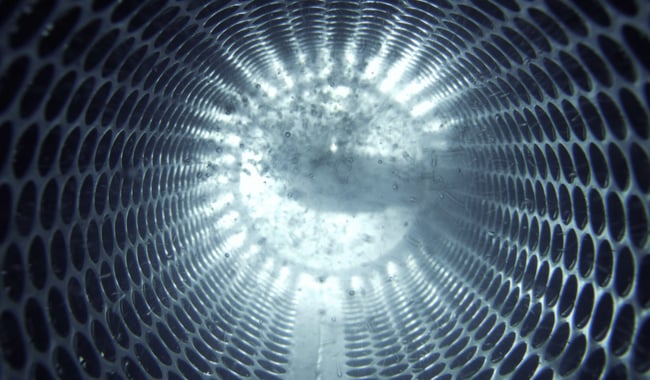 Once diagnostics pinpoint the specific bottleneck, applying the right corrective adjustment restores low-resistance flow without unnecessary hardware replacement. A few options include:
- Restore Blinded Wire Mesh Through Targeted Cleaning: For screens blinded by mineral scale or organic slime, automated water flushing alone will not recover baseline permeability. Soaking the stainless-steel element in an inhibited acid descaler (for mineral deposits) or an alkaline/oxidizing cleaner (for biofilm), followed by ultrasonic cleaning or high-pressure hydro-blasting from the clean side outward, clears embedded pores safely.
- Adjust Backwash Triggers and Flush Duration: If seasonal solids surges overwhelm an automatic strainer, lower the differential pressure initiation setpoint (for example, from 7 psi down to 4 or 5 psi) and extend the flush duration by several seconds. Catching filter cake early prevents debris from compacting deep into the weave.
- Upgrade Media Construction or Increase Open Area: Where frequent pressure spikes cause single-layer screens to deform or require constant cleaning, switching to a pleated element increases total filtration surface area within the existing housing, which helps with lowering face velocity and pressure drop. For applications facing high differential pressure surges, multi-layer sintered laminates such as POROSTAR® provide rigid structural support that resists collapse during aggressive backwashing.
Maintaining a Low Pressure Drop in Water Strainers
High differential pressure across industrial water strainers is a direct reflection of how well screen open area, cleaning mechanics, and hydraulic flow match actual plant water conditions.
Catching rising pressure trends early protects downstream heat transfer surfaces, trims wasted pump horsepower and prevents catastrophic screen collapse.
Keeping baseline resistance low requires pairing routine gauge verification and seasonal inspection schedules with filtration media engineered for the specific solids profile of each loop. When cleaning cycles, flow velocities, and mesh geometries align, water strainers operate quietly in the background with predictable, minimal energy loss.
Because subtle adjustments in weave geometry, pleat depth, and alloy selection strongly influence both clean pressure drop and cleanability, collaborating with experienced wire weaving engineers helps resolve chronic strainer bottlenecks at the source. Validating element construction against real operating pressures ensures long-term mechanical durability across demanding service intervals.
Backed by over 135 years of precision wire weaving, HAVER & BOECKER partners with plant maintenance teams and process engineers to manufacture high open area wire mesh filter elements, which include rigid POROSTAR® sintered laminates, for industrial water strainers. By combining accurate aperture control with durable corrosion-resistant alloys, HAVER & BOECKER helps facilities maintain low differential pressure, simplify screen cleaning, and sustain uninterrupted system flow.
Read our article below to discover more about how POROSTAR® sintered laminates can help improve your industrial water filtration process: