.jpg?width=48&height=48&name=Dylan%20Polz%20(new).jpg)
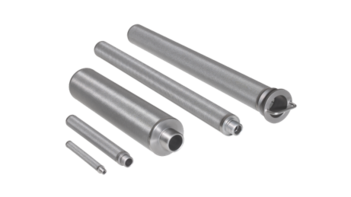
In high-temperature chloride-route titanium dioxide production, inline hot gas filtration relies heavily on precise pore engineering to capture fine solid contaminants without constricting active process gas flow. Positioned directly inside fluid-bed chlorination reactors, calciners, and high-temperature oxidation loops, rigid filter candles separate unreacted ore fines, petroleum dust, and pigment particles from vaporized titanium tetrachloride production streams.
Operating continuously at temperatures ranging from 300°C to over 1000°C in aggressive dry chlorine gas environments requires filter elements with accurately defined pore structures that can withstand severe thermal and mechanical cycling.
Selecting the correct micron rating for inline filter candles directly dictates particle capture efficiency, pressure drop stabilization, and downstream equipment protection. When filter pore dimensions are mismatched to process particle size distributions, facilities face either severe particulate carryover that erodes downstream compressors and control valves or rapid media blinding that forces unscheduled unit shutdowns.
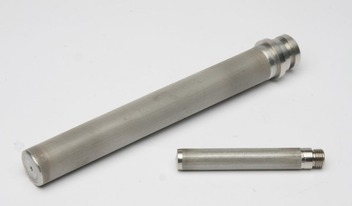
HAVER & BOECKER manufactures POROSTAR® sintered wire mesh filter candles engineered with tightly controlled pore tolerances for demanding chlorine gas filtration applications. By diffusion-bonding multi-layer woven wire mesh into rigid, monolithic laminates, these filter elements provide exact pore size distribution and dependable mechanical strength under extreme operating conditions.
This article, written specifically for chemical process engineers, plant reliability specialists, and mechanical integrity managers evaluating inline filtration performance in chloride-route titanium dioxide facilities, examines the technical role of pore sizing, analyzes the performance differences between nominal and absolute ratings, and outlines how customized micron selection optimizes operational efficiency and pigment yield.
The Importance of Micron Ratings in Titanium Dioxide Production
Process gas streams issuing from chlorination and oxidation reactors carry diverse particulate loads spanning multiple size fractions. Understanding how specific micron ratings govern separation efficiency within these active production circuits requires examining three key operational zones:
- Capturing Pigment and Ore Fines: In chlorination and oxidation units, solid particles range from coarse unreacted ore down to sub-micron titanium dioxide crystals. Filter candles must feature precise pore dimensions capable of capturing fine particulate tails while preventing smaller fractions from migrating into internal flow channels.
- Controlling Initial Differential Pressure: Selecting a micron rating that is unnecessarily tight restricts active open area, creating high baseline pressure drop across the filter vessel. This forces process gas blowers and draft fans to expend excessive electrical energy to maintain volumetric flow rates through the reactor loops.
- Preventing Particulate Bypass: Conversely, selecting an overly loose micron rating allows fine abrasive dust to pass through the filtration boundary. Uncaptured particulates travel downstream, scouring control valve trim, fouling heat exchanger tubes, and damaging compressor impellers.

Operating in these environments also demands rigorous control over material degradation. At temperatures exceeding 300°C, dry chlorine gas and vaporized titanium tetrachloride aggressively attack standard stainless steels, causing pitting corrosion and stress corrosion cracking.
To preserve pore geometry and structural integrity over years of continuous operation, filter elements require high-nickel alloys such as Inconel or Hastelloy, which maintain stable mechanical dimensions and oxidation resistance under severe halogen exposure.
Nominal vs. Absolute Ratings in Hot Gas Filter Performance
Evaluating filter media pore specifications requires a clear distinction between rating methodologies, particularly when managing high-temperature, heavy-dust process gas streams:
- Nominal Micron Ratings: A nominal rating indicates a filter’s approximate particle removal efficiency, typically capturing a stated percentage (usually 60% to 90%) of particles at or above a given size. In high-solids titanium dioxide production, nominally rated media (such as standard felted or loose fibrous structures) exhibit wide pore size distributions. This inconsistency allows fine sub-micron dust to slip through or lodge erratically within the media matrix, leading to unpredictable particle breakthrough and unstable filtration performance.
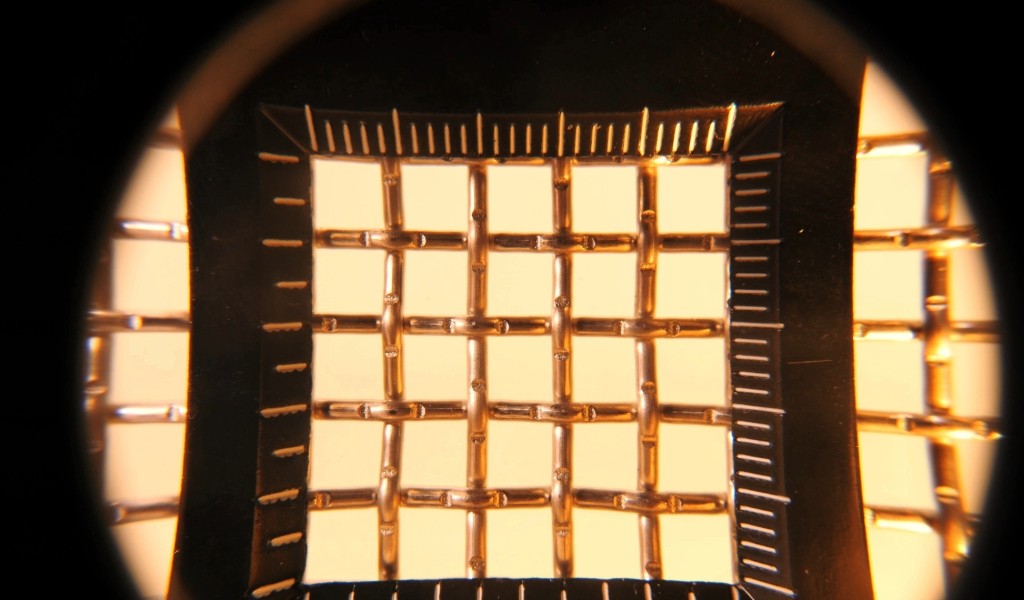
- Absolute Micron Ratings: An absolute rating guarantees the complete removal of all solid particles at or exceeding the stated micron size. POROSTAR® sintered wire mesh filter elements achieve true absolute ratings through precision-woven metal cloths fused under high heat and pressure. Every pore opening is structurally locked in place, ensuring that particles larger than the designated micron threshold cannot bypass the media boundary.
Looking to discover more about the differences between absolute vs. nominal micron ratings? Read our article below:
Tailoring POROSTAR® Micron Ratings for Your System
Achieving optimal filtration performance in chloride-route titanium dioxide loops requires matching filter pore geometry to the specific particle size distribution and operational parameters of each vessel.
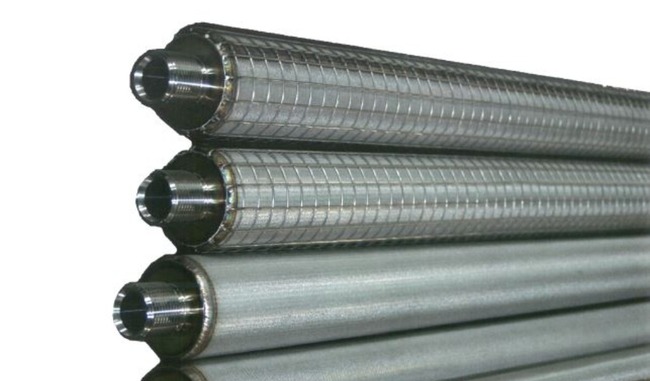
POROSTAR® sintered wire mesh filter candles engineered by HAVER & BOCKER provide customizable micron ratings tailored to specific process demands through advanced manufacturing techniques that include:
- Diffusion-Bonded Matrix Stability: Fusing multiple layers of precision-woven wire cloth locks each wire intersection permanently in place. This eliminates pore shift and stretching under high face velocities, maintaining absolute micron retention across thousands of thermal cycles.
- Optimized Open Area and Permeability: By combining fine filtration layers with robust coarser support meshes, POROSTAR® elements maximize open surface area. This engineered permeability allows high gas throughput at minimal clean-gas differential pressure, reducing compressor energy consumption.
- Clean Surface Cake Release: The two-dimensional surface structure of precision-woven mesh ensures that captured titanium dioxide dust forms a uniform, permeable cake on the exterior boundary. During automated pulse-jet cleaning, this cake shears cleanly away without entering the internal pore matrix, preventing permanent blinding.
- Alloy-Matched Durability: Available in specialized high-nickel alloys including Inconel and Hastelloy, these filter candles resist aggressive chlorine gas corrosion and high-temperature oxidation, preserving absolute pore dimensions over extended operating campaigns.
Selecting the Best Micron Rating for Maximum TiO2 Yield
Maximizing operational efficiency and pigment yield in chloride-route titanium dioxide manufacturing depends on deploying inline hot gas filter candles with absolute, reliable micron ratings. Replacing unpredictable nominal media or rapid-blinding depth filters with custom-engineered POROSTAR® sintered wire mesh elements enables plant operators to eliminate particulate bypass, stabilize differential pressure, and protect vital downstream capital equipment from abrasive wear.
Selecting the appropriate micron rating for chlorination, calcination, and oxidation loops ensures precise containment removal while maintaining continuous, energy-efficient gas circulation. Partnering with experienced filtration specialists allows chemical processing facilities to tailor alloy selection and pore geometry to exact operating conditions, securing long-term plant reliability.
HAVER & BOECKER collaborates directly with reliability engineers, plant managers, and process designers to supply application-specific POROSTAR® sintered wire mesh filter candles. Backed by more than 135 years of wire weaving expertise, HAVER & BOECKER delivers durable hot gas filtration solutions designed to optimize titanium dioxide production yields and eliminate unscheduled downtime.
Make sure to check out the article below to not only learn the importance of protecting your downstream equipment in your system, but to also learn how POROSTAR® wire mesh filter candles can greatly benefit your process: