
.jpg?width=48&height=48&name=Dylan%20Polz%20(new).jpg)
In active chloride-route titanium dioxide manufacturing, inline hot gas filtration serves as a primary protective barrier for high-value downstream process equipment. Situated inside central process loops, which include fluid-bed chlorination units, calcination circuits, and high-temperature oxidation reactors, rigid filter candles capture entrained unreacted ore fines, petroleum dust, and pigment particles before gas streams enter downstream capital machinery.
Operating continuously at temperatures from 300°C to beyond 1000°C while handling aggressive vaporized titanium tetrachloride production streams and dry chlorine gas requires filtration media that maintains structural integrity without allowing particulate bypass.
While upstream inline filter elements fail or allow particulate carryover, hard abrasive dust passes directly into downstream process units. Unfiltered gas streams carrying unreacted solids cause rapid erosion of control valve seats, surface fouling in shell-and-tube heat exchangers, and severe impinger scoring in process gas compressors and condenser columns. The financial impact of particulate carryover extends far beyond immediate element replacement, manifesting as accelerated capital depreciation, frequent seal rebuilds, and emergency plant outages.
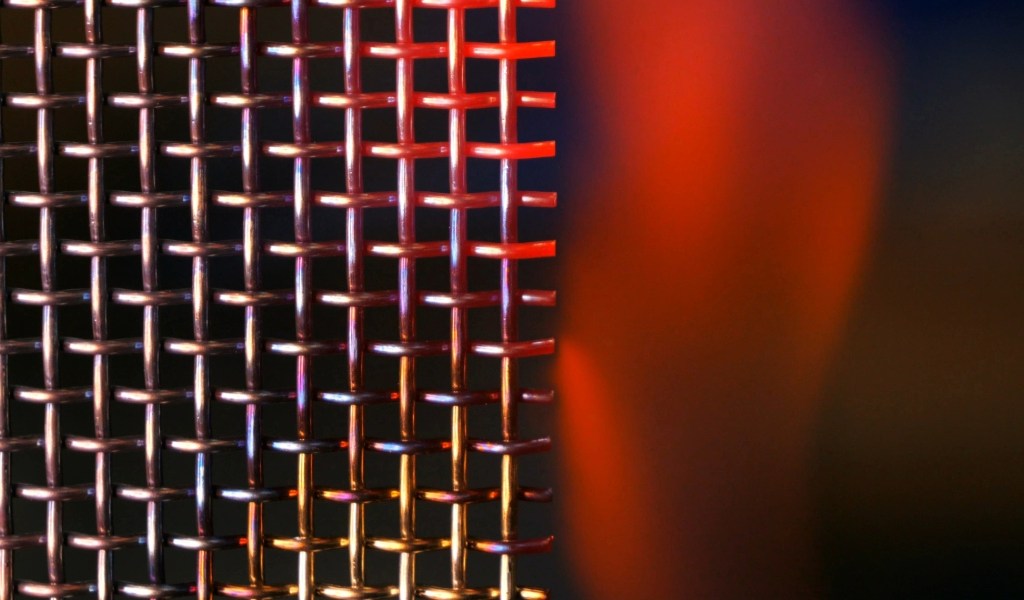
HAVER & BOECKER manufactures POROSTAR® sintered wire mesh filter candles engineered specifically to shield downstream process infrastructure in demanding chlorine gas filtration environments. Constructed by diffusion-bonding multiple layers of precision-woven metal mesh under high thermal pressure, these rigid filter elements deliver fixed pore openings, high structural ductility, and exceptional resistance to thermal shock and halogen corrosion.
In this article, written specifically for mechanical integrity engineers, chemical plant managers, and equipment reliability specialists, we detail the physical mechanisms of downstream equipment wear and demonstrate how engineered high temperature filter mesh preserves process machinery while maintaining steady-state gas circulation.
How Particulate Carryover Damages Downstream Hardware
Process gas streams issuing from chlorination reactors and calcination units transport significant quantities of hard, angular solids at high face velocities. When inline filter candles suffer structural failure or wall perforation, these uncaptured solids act as an internal grit blast against downstream hardware, causing the following:
- Control Valve and Actuator Trim Scouring: High-velocity gas streams carrying petroleum dust and unreacted ore solids rapidly erode control valve plugs, seats, and throttling vanes. Surface scouring creates internal gas leakage across closed valves, making precise vessel pressure control impossible and risking gas leaks.
- Heat Exchanger Tube Fouling and Thermal Impairment: Entrained pigment particles and metal oxides settle on internal heat exchanger tube walls and cooling condenser surfaces. As particulate layers accumulate, they form an insulating thermal boundary layer that drastically reduces heat transfer efficiency, forcing utilities to consume additional energy to condense titanium tetrachloride vapors.
- Process Gas Compressor Blade Degradation: Downstream gas compressors and booster blowers experience severe impingement wear on rotating impellers and casing linings. Abrasive particulate impact damages dynamic balances, induces destructive mechanical vibration, and degrades shaft seal assemblies.

Chemical attack exacerbates mechanical wear inside hot gas loops. At operating temperatures above 300°C, dry chlorine gas aggressively attacks standard austenitic stainless steels (such as 304 or 316 alloys), causing severe pitting corrosion, intergranular degradation, and stress corrosion cracking.
To protect both filtration hardware and downstream piping from halogen attack, filter elements usually utilize high-nickel metallurgy such as Inconel or Hastelloy, which forms a stable protective oxide layer under high-temperature chlorination service.
Severe mechanical wear also stems from cleaning-induced thermal transients. Automated reverse pulse-jet systems inject cold compressed gas into hot element cores to dislodge exterior dust cakes. The resulting thermal shockwaves test element seam integrity; if media cracks or splits during back-washing, unfiltered process gas immediately bypasses the filter barrier, flooding downstream piping with abrasive particulates.
Wear Mechanisms in Unprotected Hot Gas Process Lines
Process gas streams leaving active chloride-route chlorinators, calciners, and oxidation loops present an aggressive combination of physical and chemical wear drivers. When inline process gas filtration is absent, compromised, or mismatched to process conditions, entrained particulates and reactive vapors act through four primary wear mechanisms that degrade downstream piping and process machinery:
- High-Velocity Impingement Erosion: Unreacted ore fines and petroleum particles possess high angular hardness. As hot process gas accelerates through downstream piping bends, control valve orifices, and compressor inlet vanes, these heavy solids strike metal surfaces at high face velocities. This continuous impact causes rapid wall thinning, surface gouging, and localized perforation across downstream piping and valve trim.
- Thermal-Mechanical Stress Transients: Rapid pressure pulses and localized temperature fluctuations inside hot reaction loops create severe cyclic mechanical stress. High-frequency pulse-jet cleaning surges create localized thermal transients across filter vessel internals. Without elastic flex or mechanical ductility, structural hardware experiences micro-cracking and fatigue failure, allowing unfiltered solids to bypass the primary filtration barrier.
- High-Temperature Halogen Chemical Attack: At operating temperatures from 300°C to well over 1000°C, vaporized titanium tetrachloride production gas and dry chlorine gas rapidly degrade standard austenitic stainless steels. Exposure to hot halogen atmospheres induces pitting, intergranular corrosion, and stress corrosion cracking. This chemical attack thins metal walls and weakens structural joints, accelerating mechanical erosion from entrained dust.
- Depth Matrix Blinding and Pressure Drop Elevation: Fine titanium dioxide dust easily migrates into internal, tortuous flow channels. When particulates lock permanently within internal pore structures rather than building a surface cake, reverse pulse-jet cleaning cannot dislodge the trapped material. The resulting permanent pressure drop buildup forces downstream gas compressors to operate at peak electrical loads, accelerating seal wear and dynamic impeller degradation.
Having difficulty determining if your hot gas filter is degrading? Check out the article below to discover early signs to look out for and what you can do about it:
Safeguard Critical Assets with POROSTAR® Filter Candles
POROSTAR® sintered wire mesh filter candles engineered by HAVER & BOECKER resolve particulate carryover and thermal shock vulnerabilities through a multi-layer diffusion-bonded design. Fusing precision woven wire cloth layers under high heat and pressure creates monolithic sintered laminates that provide distinct operational advantages for downstream asset protection, which include:
- Two-Dimensional Surface Filtration: Multi-layer POROSTAR® mesh traps solid particles strictly on the outer boundary layer. Captured titanium dioxide dust forms a permeable cake that shears cleanly off during reverse pulse-jet cleaning, preventing internal depth blinding and maintaining stable vessel differential pressure.
- Ductile Resistance to Thermal Shock: Fabricated from solid metal alloys, sintered wire mesh candles flex elastically under rapid temperature changes and high-pressure reverse pulses without cracking, spalling, or shedding material into clean downstream gas lines.
- Custom High-Nickel Metallurgy: To resist severe chlorine gas filtration atmospheres, POROSTAR® elements are fabricated usually from Inconel or Hastelloy. This targeted alloy selection eliminates halogen pitting and stress corrosion cracking, preserving media wall thickness over years of continuous service.
- Fixed Pore Geometry and Permeability: High-temperature diffusion bonding fuses every wire intersection in the matrix. This locks pore openings in place, preventing pore distortion under high face velocities while maintaining uniform gas distribution.

Extending Equipment Service Life and Eliminating Downtime
Protecting high-value process machinery in chloride-route titanium dioxide manufacturing requires hot gas filtration infrastructure designed for extreme thermal, chemical, and mechanical realities. Replacing fragile ceramic elements or rapid-blinding depth media with high-integrity back-washable metallic candles allows plant operators to eliminate catastrophic particulate carryover, stabilize process pressure drops, and protect downstream heat exchangers, control valves, and gas compressors.
Deploying corrosion-resistant sintered wire mesh filter candles directly downstream of chlorination reactors, calciners, and oxidation vessels shields capital assets, extending operating campaigns, and optimizes titanium dioxide pigment recovery. Combining customized alloy selection with surface-loading mesh geometry gives chemical manufacturing facilities a reliable path to continuous plant uptime.
HAVER & BOECKER collaborates directly with process engineers, reliability managers, and equipment designers to supply custom-engineered POROSTAR® sintered wire mesh filter candles. Tailored to match exact vessel geometry, operating temperatures, and gas chemistry, HAVER & BOECKER provides durable hot gas filtration solutions backed by more than 135 years of technical wire weaving leadership.
Read the article below to learn more about how you can utilize your filter media to maximum effectiveness and yield the best production from your system: