.jpg?width=48&height=48&name=Dylan%20Polz%20(new).jpg)
High-density AI server deployments running multi-hundred-watt chips are changing the mechanics of data center cooling. As heat fluxes soar, facilities rely heavily on continuous fluid circulation through primary facility water systems and secondary technology cooling loops. However, maintaining high-volume fluid movement introduces a persistent infrastructure threat: continuous particulate accumulation.
When scale, metal filings, airborne dust, and organic debris accumulate in a recirculating water loop, thermal performance drops. Unmanaged suspended solids coat heat exchanger plates, restrict flow in sensitive control valves, and increase dynamic pressure drop across the entire system. Because processing a facility’s entire volumetric flow through full-flow inline filtration demands excessive energy and large physical footprints, infrastructure engineers utilize a strategic alternative: side-stream filtration.
At HAVER & BOECKER, we engineer specialized woven wire mesh filter media tailored to the rigorous hydraulic and thermal demands of data center cooling networks. Our technical team works alongside facility designers to implement filtration media that delivers precise particle retention while maintaining minimal flow resistance.
In this guide, we will break down the mechanics of side-stream filtration, analyze why continuous slip-stream processing is essential for high-density AI architectures, and explore how high-flow metal filter cloth protects mission-critical cooling loops. We will also examine the operational boundaries of physical wire mesh to help you build a balanced, highly efficient water management program.
What Is Side-Stream Filtration and How Does It Work?
Side-stream filtration (also known as slip-stream filtration) is a mechanical water treatment strategy where a dedicated percentage of a cooling system’s total recirculating volume is diverted offline, filtered to remove suspended solids, and returned directly to the main loop.
Rather than forcing 100% of the main fluid flow through tight, high-resistance inline filter housings, a side-stream loop continuously polishes a controlled fraction of the water.
In a standard side-loop setup, the system continuously diverts roughly 5% to 15% of the total circulating water volume from the main header into a bypass line. This diverted slip-stream passes through a dedicated pump and filter housing engineered to capture fine suspended solids, rust flakes, and airborne particulates before they form larger agglomerates.
By processing approximately 10% of the loop volume per hour, a side-stream installation achieves a complete turnover of the system’s total fluid volume every 6 to 12 hours. The clean, filtered water then re-enters the main cooling line downstream, continually diluting overall total suspended solids without restricting main-line velocity or adding head pressure to primary supply pumps.
Why Side-Stream Filtration Is Essential for AI Cooling
AI data centers operate under strict thermal margins where even minor shifts in fluid purity jeopardize compute performance. Inline filters designed to process 100% of high-volume main loop flow require large housing footprints and create substantial pressure drops that drive up pumping power consumption.
Side-stream loops resolve this by providing continuous, targeted particulate removal while maintaining system energy efficiency.
Struggling with fouling and don't know the causes? Check out our article below to learn more about why this can happen and the solutions available:
Integrating a side-stream loop protects cooling infrastructure across three key operational areas:
- Prevention of Thermal Fouling: Suspended mineral precipitates and organic matter deposit onto heat exchanger plates inside Coolant Distribution Units (CDUs). Removing these particulates from circulation insulating scale barriers from forming, preserving optimal heat transfer coefficients.
- Protection of Sensitive Valves and Controls: Modern high-density racks rely on automated flow control valves and quick-disconnect fittings. Fine abrasive solids traveling at high velocities erode internal valve seats and cause mechanical sticking, leading to uneven fluid distribution across server banks.
- Control of Total Suspended Solids (TSS): Open cooling towers constantly pull dust, pollen, and industrial pollutants from ambient air into the facility water system. Continuous side-stream polishing keeps TSS levels within design specifications, preventing sediment from settling in low-velocity pipe turns or stagnant loop legs.
High-Flow Protection with RPD HIFLO Filter Cloth
Selecting the right filtration media for a side-stream vessel requires balancing precise particle separation with high volumetric flow capability. Woven wire mesh provides superior mechanical strength, precise pore geometry, and cleanability compared to disposable media.
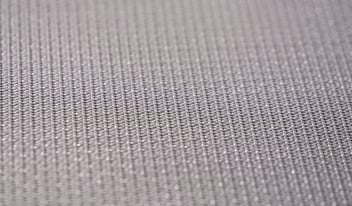
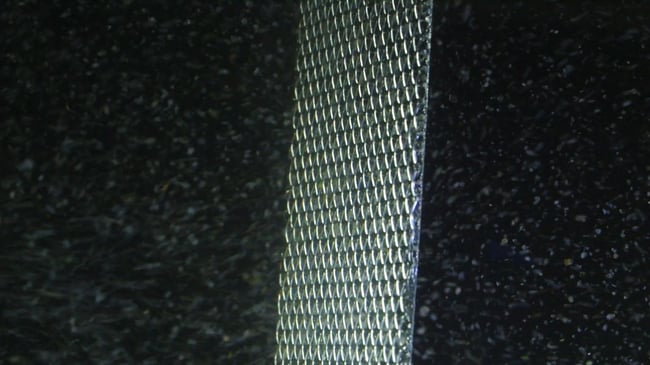
For high-demand side-stream loops requiring fine particle capture without excessive pressure loss, HAVER & BOECKER developed RPD HIFLO metal filter cloth. Manufactured with a specialized reverse plain Dutch weave structure, RPD HIFLO provides up to double the flow capacity of conventional woven filter cloth at equivalent pore sizes, significantly reducing pressure drop across the filter housing.
Calibratable pore sizes ranging from 5 to 40 microns ensure reliable separation cut-points to capture fine airborne particulates and pipe scale. Constructed from corrosion-resistant stainless-steel alloys (such as 316L) or other high-performance alloys, the media withstands continuous fluid velocity and pressure spikes without pore deformation.

For side-stream loops focused on coarse particle removal (100-200+ microns) or high-temperature backwashing, plain weave mesh that can be sinter-bonded offers an ideal alternative. Its rigid, square opening structure maintains fixed pore alignment and high structural stability even under severe hydraulic stress and repeated cleaning cycles.
Protect Your Cooling Loops with Custom Wire Mesh Filters
Side-stream filtration provides data center operators with an effective, energy-efficient method for controlling waterborne particulates without compromising main loop flow dynamics. By continuously diverting a portion of recirculating coolant through high-performance wire mesh media, facilities maintain stable thermal transfer, safeguard critical CDU components, and extend the operating life of their cooling infrastructure.
While physical wire mesh excels at solids separation and delivers low pressure drop, facility engineers must evaluate its role within a broader context. Metal filter cloth is designed exclusively for physical particulate capture, as it does not eliminate dissolved minerals, alter fluid pH, or replace chemical water treatment programs. Systems experiencing active chemical scaling, dissolved solids buildup, or uninhibited biological growth must pair mechanical side-stream filtration with appropriate chemical dosing or side-stream polishing systems.
At HAVER & BOECKER, our engineering specialists work directly with data center infrastructure teams to evaluate fluid dynamics, calculate flow requirements, and manufacture custom woven wire mesh filter elements for mission-critical cooling loops.
Ready for the next steps to upgrade your system? Check out our article below to learn more about the importance of keeping your cooling water particulate-free and how woven wire mesh solutions can help with your process: