.jpg?width=48&height=48&name=Dylan%20Polz%20(new).jpg)

Selecting hardware for a chromatography column usually involves balancing cost, availability, and performance. Laboratory managers and process engineers frequently lean on mass-produced, standardized internal components because they are easy to source and install. These catalog-order frits are designed around common dimensional baselines, offering a convenient answer for routine applications. However, relying solely on generic hardware forces highly specialized operations to adapt their processes to the physical limitations of a stock component.
When separation methods push past routine boundaries, standard hardware often struggles to keep pace. Unique flow rates and harsh chemical solvents require specific physical dynamics that pre-fabricated components cannot always deliver. Forcing a generic frit into a highly specialized application can result in subtle data inconsistencies, premature column wear, and unexpected system downtime. True efficiency is only achieved when the internal hardware matches the exact physical demands of the chemical separation, allowing the system to maintain its optimal operational baseline.
As a trusted global authority in industrial wire weaving, HAVER & BOECKER combines over 135 years of engineering experience with a commitment to manufacturing cleaner, safer, and highly durable processing environments. Our specialized teams design advanced porous components that handle the intense mechanical and fluid demands of modern liquid chromatography. By manufacturing wire mesh media with strict tolerances, we provide laboratories and production plants with the precise physical infrastructure needed to keep operations running smoothly.
This article provides a practical framework for evaluating your column containment hardware. We will analyze the specific operational conditions where standardized catalog frits fall short, establish a balanced decision-making guide to help you choose between stock and personalized options, and explain why custom-engineered wire mesh is essential for critical reporting applications. Finally, we will outline how selecting the correct frit configuration permanently maximizes long-term column performance.
Why Standard Frits Fall Short in Specialized Column Runs
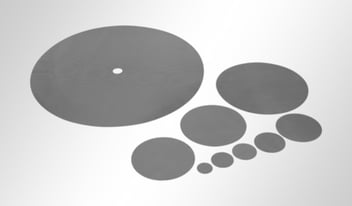
Standardized, mass produced frits are designed to satisfy the broadest possible middle ground of the chromatography market. Because they are manufactured for general use, they feature static thickness, fixed diameters, and nominal pore size ratings that work well under standard pressures and with common mobile phases.
However, this one-size-fits-all approach fails to account for the unique fluid physics that take over during specialized or non-routine separation methods.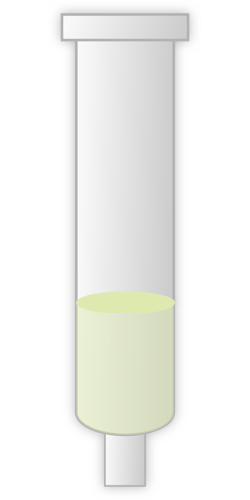
When an analytical method uses high-viscosity solvents, extreme pH ranges, or rapid flow gradients, standard catalog frits quickly reveal their structural limitations. Because their porous structures are not optimized for specialized flow rates, they act as mechanical bottlenecks that restrict fluid movement, causing sharp, unexpected backpressure spikes.
Over time, these unoptimized flow restrictions accelerate physical wear on pump seals and column seals, introducing unnecessary operational risks into the system that could be easily avoided with a tailored frit design that opens up the flow and maintains a balanced stable fluid front. Some of these risks include:
- Fixed Porosity Pitfalls: Nominal pore ratings in mass-produced components often allow subtle particle bypass or suffer from premature blinding when exposed to complex biological markings or irregular slurry distributions.
- Edge Sealing Deficiencies: Standard physical dimensions do not always account for the precise sealing tolerances of specialized column walls, leading to slight bypass gaps along the perimeter that can cause irregular sample migration across the resin.
- Mechanical Flexing Under Peak Loads: Mass-produced plastic or thin pressed powder frits can subtly warp under aggressive gradient changes, disrupting the flat fluid front needed for clean data.
Relying on standard components for non-standard runs forces technical teams to constantly adjust their operating parameters to compensate for hardware limitations. When mass-produced components limit your method development, the underlying hardware must be adapted to prevent structural changes inside the column and match the application’s true requirements.
How to Choose Between Catalog and Custom Frits
Choosing between a catalog-order component and a custom-engineered solution does not mean one choice is universally better than the other; it requires matching hardware capabilities to your specific operational goals. To remain completely unbiased, procurement and engineering teams should evaluate their applications using a clear decision framework based on pressure demands, fluid characteristics, and the financial impact of potential downtime.
Standardized catalog frits make perfect technical and economic sense for routine, low-pressure testing environments where columns run well within typical operating boundaries. If your lab runs high-turnover, established methods with non-corrosive mobile phases and stable, predictable target molecules, standard components provide a highly cost-effective and readily effective solution.
Conversely, moving toward a custom-engineered frit becomes necessary when the application involves extreme high-pressures, rapid gradients, high-viscosity fluids, or aggressive pH environments. In these situations, the critical need for precision and structural rigidity outweighs the upfront hardware investment by preventing ruined product batches and pricy system downtime.
Want to learn more about how physical hardware engineering can establish optimal fluid boundaries and performance benchmarks? Read our previous article to learn more:
To help determine which hardware path fits your specific facility goals, consider how your current application aligns across these core operational benchmarks:
- Standard Catalog Frits: Best suited for standard, low-to-medium operating pressure ranges, common non-corrosive solvents, and high-volume availability where low upfront component cost is the primary priority.
- Custom-Engineered Frits: Highly recommended for extreme high-pressures, rapid gradients, and high-viscosity or aggressive pH fluids. They are chosen for their precision, structural rigidity, and their long-term ability to prevent ruined high-value batches and facility down-time.
Why Custom Frits Are Essential for Critical Reporting
In critical reporting environments such as regulated pharmaceutical validation, forensic analysis, or high-value bioprocessing, the margin for data error is non-existent. When operations must guarantee complete peak reproducibility to regulatory bodies, the internal mechanics of the column must remain absolutely flawless.
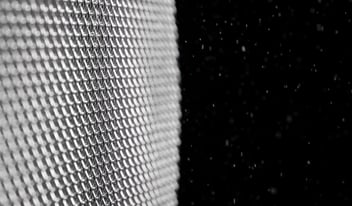
Custom-engineered wire mesh frits serve as the hidden foundation for these high-stakes applications, allowing engineers to manipulate the exact physical attributes of the porous media to achieve a completely linear flow front and perfect peak symmetry that standard hardware cannot address.
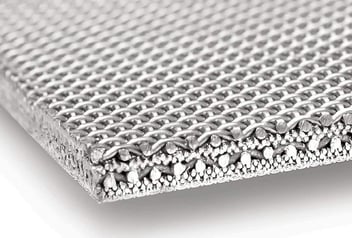
By tailoring the ratio of open area to solid material, custom multi-layer wire mesh laminates can optimize fluid distribution without inflating system backpressure:
- Precision Aperture Matching: Custom weaving allows the pore structure to be engineered down to the exact micron, matching the particle size distribution of specialized resins to prevent media migration.
- Optimized Radial Flow Distribution: Tailored layer configurations act as internal flow straighteners, ensuring the sample plug spreads evenly across the entire column face the instant it enters.
- Unyielding Mechanical Rigidity: Permanently bonding multiple layers of precision stainless steel cloth creates a robust, non-deformable barrier that refuses to bow or compress under peak packing pressures.

When data accuracy is vital, eliminating the random, unpredictable pathways of mass-produced components is essential. Custom wire mesh laminates ensure that the physical flow path remains identical across every single run, providing the mechanical consistency needed to support total confidence in your critical analytical reporting.
Choosing the Right Frit to Maximize Column Performance
Achieving optimal performance throughout the lifespan of a chromatography column requires matching your internal hardware with your exact processing conditions. Relying on generic components for specialized applications often leads to ongoing troubleshooting, frequent column repacking, and lost productivity. By intentionally choosing the correct frit architecture, facilities can eliminate the root physical causes of baseline noise, flow distortion, and premature hardware failure.
Integrating custom-engineered multi-layer laminates such as POROSTAR into your high-stakes column systems provides an unyielding, geometrically uniform fluid interface that handles intense operating forces without deforming. This precision engineering protects your valuable resin beds, balances fluid distribution, and keeps your columns operating at peak efficiency. For modern laboratories and production plants, making the right hardware decision means more continuous uptime, lower maintenance costs, and total reproducibility across every separation run.
At HAVER & BOECKER, we engineer advanced internal components to help high-precision facilities worldwide achieve cleaner, safer, and completely dependable operations. Our over 135 years of manufacturing heritage allow us to design and build multi-layer wire mesh laminates that maintain strict pore tolerances and structural integrity under continuous pressure. We focus on optimizing open area ratios and achieving absolute material consistency, ensuring your operations can maximize equipment longevity, protect capital investments, and maintain flawless data continuity for every single run.
To learn more about how physical hardware choices directly influence internal column dynamics, read our comprehensive guide below: