.jpg?width=48&height=48&name=Dylan%20Polz%20(new).jpg)
In active chloride-route titanium dioxide manufacturing, inline hot gas filtration acts as the central governor of plant mass balance and energy consumption. Deployed inside high-temperature reaction circuits, which include fluid-bed chlorinators, calcining kilns, and TiCL4 oxidation reactors, rigid filter candles separate entrained rutile ore fines, petroleum dust, and pigment particles from hot process gas streams.
Operating at temperatures from 300°C to well over 1000°C under high pressure while handling dry chlorine gas requires filtration media that delivers high volumetric throughput without inducing flow resistance.
Sub-optimal filtration creates operational bottlenecks across active process lines. When filter elements experience progressive surface blinding or structural distortion, system pressure drops climb exponentially. This artificial hydraulic resistance forces process gas compressors to consume excess electrical power, throttles reactor throughput, and causes thermal instabilities that degrade overall titanium dioxide yield.
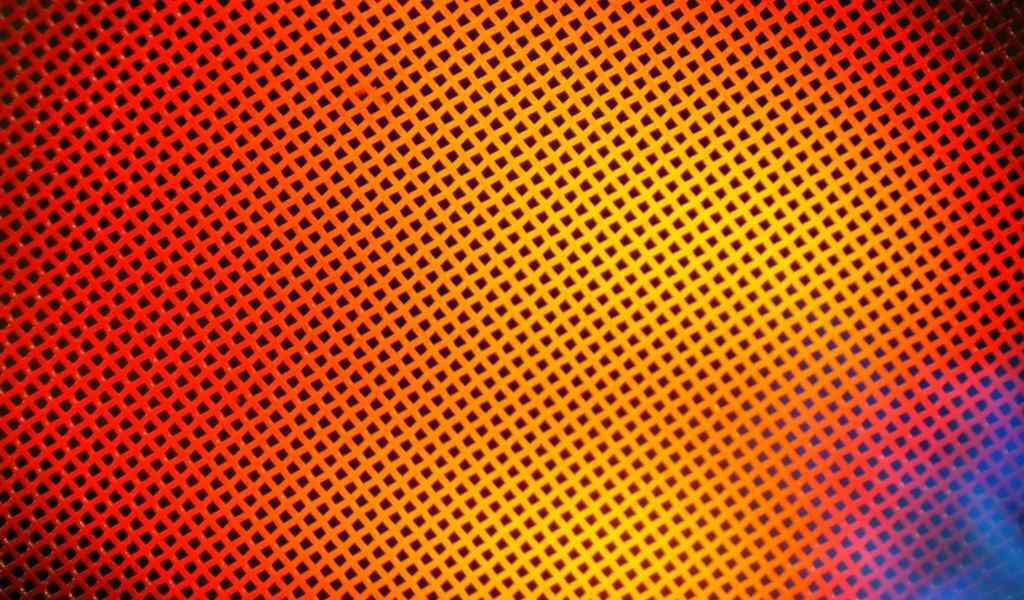
HAVER & BOECKER, with over 135 years of experience, manufactures POROSTAR® sintered wire mesh filter candles engineered to maximize gas permeability and process reliability in aggressive chlorine gas filtration environments. Solid-state diffusion bonding fuses multiple layers of precision-woven metal cloth into rigid, highly permeable laminates that deliver constant flow distribution and low baseline differential pressure.
In this article, written specifically for plant operations managers, process optimization engineers, and energy/sustainability leads, we analyze the operational costs of inefficient filtration, demonstrate the energy impact of differential pressure control, and outline how engineered wire mesh optimizes overall process throughput.
The Costs of Inefficient Hot Gas Filter Performance
Inefficient inline gas filtration manifests primarily as a direct penalty on plant energetics and daily manufacturing capacity. In high-velocity process gas loops, sub-optimal filtration performance imposes three distinct financial and operational burdens:
- Parasitic Compressor Load and Electrical Amperage Spikes: As fine solids bridge over or lodge within filter media pores, upstream process blowers must work against rising backpressure to maintain required gas fluidization velocities inside chlorination vessels. To overcome this resistance, drive motors draw significantly higher electrical current. Over a continuous operating campaign, this parasitic load adds tens of thousands of dollars in utility costs per filtration train.
- Reactor Throughput Throttling and Yield Loss: When vessel differential pressure reaches safety relief units, plant operators must turn down chemical feed rates to prevent equipment damage. Forced throughput reductions directly decrease daily titanium tetrachloride output. This artificial capacity ceiling dilutes gross plant operating margins and disrupts downstream reactions.
- Thermal Cycling Fatigue and Unplanned Maintenance: Non-cleanable or brittle filter media that blinds permanently requires premature vessel depressurization and thermal cooling for element changeouts. These repeated cooling and re-heating cycles subject reactor brick linings, flange seals, and piping welds to severe thermal shock fatigue, leading to costly refractory repair work and unscheduled downtime.

Corrosive gas dynamics compound these mechanical failures. At temperatures above 300°C, dry chlorine gas attacks standard stainless steels through rapid pitting and intergranular degradation.
To preserve structural wall thickness and maintain calculated pore geometry over years of service, filter elements require high-nickel alloys such as Inconel or Hastelloy, which form stable, protective passive films under severe chlorination service.
Stabilizing Differential Pressure to Reduce Energy Demands
Controlling gas loop energy consumption requires managing the physical mechanics of particle deposition.
The architecture of the filtration media determines whether differential pressure remains stable or climbs continuously during a production run, which include:
- Depth Media limitations (Powder Metal & Ceramic Structures): Three-dimensional tortuous media paths trap sub-micron titanium dioxide dust deep within internal pore channels. Reverse pulse-jet cleaning surges cannot dislodge these deeply embedded solids. As a result, the element suffers irreversible depth blinding, driving a steep, continuous rise in baseline pressure drop that forces premature system shutdowns.
- Surface Media Advantages (POROSTAR® Sintered Mesh): Engineered multi-layer wire cloth restricts particle separation strictly to the two-dimensional outer boundary. Entrained solids form a thin, permeable surface cake that detaches cleanly during automated reverse pulses. The element returns to its baseline clean pressure drop after every cleaning cycle, flattening the system differential pressure curve and eliminating parasitic compressor loads.
If you want to discover more about the benefits of wire mesh filtration in titanium dioxide production, read the article below:
Maximizing TiO2 Yield and Energy Efficiency with POROSTAR®
POROSTAR® sintered wire mesh filter candles engineered by HAVER & BOECKER resolve process efficiency losses by combining high open surface area with structural rigidity.
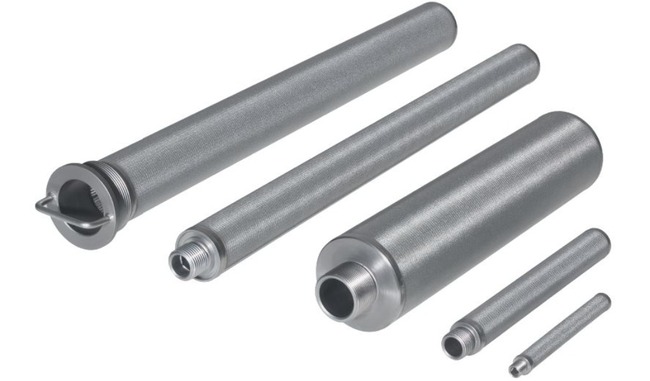
Diffusion-bonding precision-woven filtration mesh with robust support layers creates distinct performance advantages for chloride-route processing, which include:
- High Specific Permeability: Precision-woven wire geometry maximizes open area, allowing high gas face velocities at minimal clean-gas pressure drop.
- Stable Pressure Drop Recovery: Two-dimensional surface filtration enables complete cake release during pulse-jet cleaning, preventing cumulative pressure drop buildup.
- High-Ductility Thermal Resistance: Solid metallic construction absorbs rapid temperature shifts and high-pressure back-pulses without cracking or shedding debris.
- Targeted Halogen Metallurgy: Fabrication in Inconel or Hastelloy prevents chlorine gas corrosion, preserving pore size and flow capacity over multi-year campaigns.
Achieving Sustainable Efficiency in Chloride TiO2 Plants
Achieving long-term process efficiency gains in chloride-route titanium dioxide production requires inline hot gas filtration infrastructure engineered for minimal flow resistance and total cake discharge. Upgrading from rapid-blinding depth media or fragile ceramic tubes to high-integrity POROSTAR® sintered wire mesh candles allows plant teams to eliminate parasitic power draws, stabilize vessel pressure drops, and protect maximum daily plant output.
Positioning corrosion-resistant metallic filter candles directly inside fluid-bed chlorination, calcination, and oxidation loops provides chemical manufacturing facilities with a clear path toward reduced utility costs, extended campaign lengths, and optimized titanium dioxide pigment recovery.
HAVER & BOECKER works directly with process engineers, plant managers, and operations leaders to design application-specific POROSTAR® sintered wire mesh filter candles. Tailored to match exact vessel geometry, gas chemistry, and flow requirements, HAVER & BOECKER delivers durable hot gas filtration solutions backed by more than 135 years of technical wire weaving leadership.
Read the article below to not only learn the importance of protecting your downstream equipment in your system, but to also learn how POROSTAR® wire mesh filter candles can greatly benefit your process: