In chloride-route titanium dioxide manufacturing, off-the-shelf filtration hardware rarely delivers the precision required to withstand severe operating environments. For industry experts that include plant reliability engineers, equipment procurement specialists, and maintenance directors overseeing primary reactor loops, generic filtration designs often result in premature media blinding, erratic pressure drops, and costly unscheduled downtime.
Optimizing plant throughput requires custom-engineered separation hardware tailored precisely to the mechanical and chemical realities of industrial processing.
Operating within primary chlorination and oxidation zones exposes internal components to aggressive particulate burdens, reactive chemical vapors, and extreme thermal gradients. When standard, mass-produced filter elements are installed in these high-stress circuits, structural degradation occurs rapidly, compromising fluid-bed stability and driving up maintenance overhead.
Designing bespoke hot gas filtration assets ensures that every micron rating, permeability ratio, and structural dimension aligns perfectly with facility-specific operational goals.
The following sections examine why standard solutions often fail, outline the exact structural requirements for severe processing environments, and explore how specialized sintered wire mesh filter candles deliver long-term process stability.
Why Standard Solutions Fall Short in TiO2 Production
Many industrial facilities initially attempt to deploy standard, commercially available dust collection elements or generic cartridges into their primary reaction loops to control capital expenditures. However, these mass-produced designs are fundamentally engineered for low-temperature, benign air-pollution control applications rather than the harsh, corrosive realities of titanium dioxide manufacturing.
When subjected to high-temperature solid-gas separation duties involving dense mineral ore and petroleum dust, standard filters exhibit several critical operational vulnerabilities:
- Inadequate Structural Rigidity: Commercial filter cages and light-gauge wire cloths lack the mechanical strength required to resist high-velocity gas scouring and continuous structural fatigue during aggressive pulse-cleaning cycles.
- Uncontrolled Pore Geometry: Generic manufacturing methods often produce uneven mesh openings, allowing fine particulates to bypass retention thresholds or wedge permanently into internal pore channels, triggering irreversible blinding.
- Mismatched Metallurgical Limits: Standard commercial alloys degrade quickly when exposed to reactive halide vapors and extreme thermal loads, leading to rapid wall thinning and catastrophic structural collapse.

Relying on off-the-shelf alternatives ultimately creates a false economy. The frequency of emergency replacements, combined with lost production time during unplanned vessel turnarounds, far outweighs the initial capital savings of generic hardware, making custom engineering an operational necessity for severe service lines.
Requirements for Aggressive TiO2 Production Environments
Designing an effective filter candle for chloride-route titanium dioxide processing demands a rigorous engineering approach that accounts for the simultaneous action of extreme heat and reactive chemistry.
Primary reaction zones routinely operate at temperatures exceeding 1,000°C (1,832°F), requiring high-nickel alloys such as Inconel or Hastelloy to prevent structural creep, thermal fatigue, and oxidation.
Furthermore, the presence of chlorine gas and volatile titanium tetrachloride (TiCl4) vapor creates an aggressive corrosive matrix that rapidly attacks standard stainless steels through pitting and halogen embrittlement.
If you want to discover more about the benefits of wire mesh filtration in titanium dioxide production, read the article below:
Beyond material selection, custom designs must carefully balance absolute micron retention with high flow permeability. Achieving efficient separation or abrasive sub-micron ore fines without driving up blower electrical draw requires precise control over the open-area percentage and wire diameter rations.
Additionally, filter elements must endure thousands of high-pressure reverse pulse-jet cleaning cycles, where sudden bursts of cooler gas generate severe thermal shock gradients across the media boundary.
Furthermore, managing the fluid-dynamic behavior of the gas-solid suspension is vital for maintaining steady operating pressures. As dense burdens of mineral ore and dust are continuously drawn toward the filter surface, the media must facilitate rapid cake dislodgement without allowing fine particulates to wedge permanently into internal pore pathways.
Establishing this dynamic equilibrium between permeability and particulate separation prevents runaway differential pressure spikes, ensuring that the filtration sustains high volumetric throughput and reliable pneumatic efficiency across extended production campaigns.
How POROSTAR® Excels in Titanium Dioxide Processing
To meet the exacting demands of primary chloride processing, custom manufacturing techniques must bridge the gap between material durability and separation efficiency.
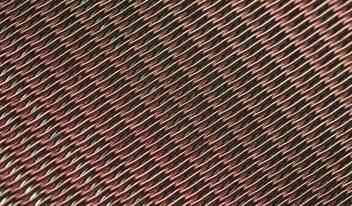
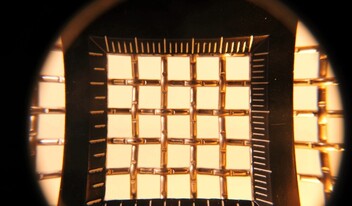
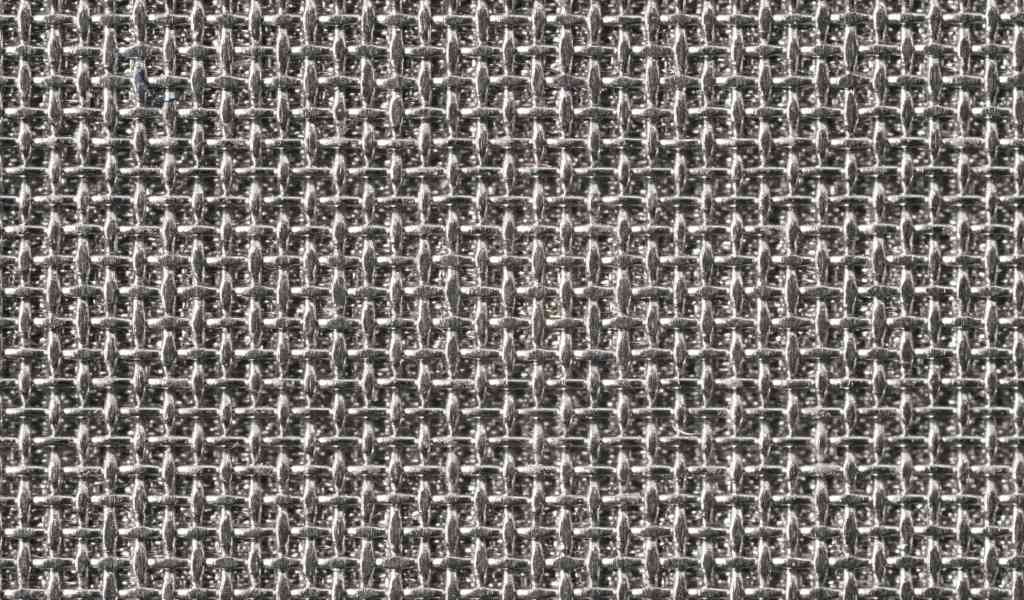
HAVER & BOECKER engineers POROSTAR® filter candles using advanced solid-state diffusion bonding, fusing multiple layers of precision-woven wire mesh into a rigid, monolithic laminate under controlled atmospheric heat and pressure. This specialized construction methodology eliminates the weak points associated with traditional welding or single-layer wire cloth.
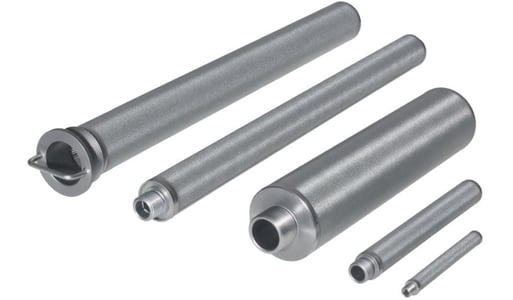
The resulting diffusion-bonded sintered wire mesh establishes a true exterior surface-loading filtration mechanism. Instead of allowing fine particulate matter to penetrate deep into internal pore structures, which is the primary cause of permanent blinding in generic filters, particles are captured entirely on the outer boundary of the filter candle.
This geometry ensures that automated reverse pulse-jetting completely dislodges the accumulated dust cake, stabilizing baseline differential pressure and extending active service life across multi-month production campaigns.
By tailoring layer configuration and mesh counts to exact facility requirements, custom POROSTAR® elements deliver optimized flow dynamics, exceptional resistance to thermal shock, and reliable structural integrity in the harshest chemical environments.
Securing Success with Tailored Hardware
Selecting and customizing the right filtration hardware is a fundamental operational decision that directly dictates asset availability, maintenance overhead, and long-term profitability in titanium dioxide manufacturing.
By carefully aligning bespoke alloy metallurgy, precise surface filtration geometry, and robust thermal durability with your facility’s exact operating parameters, plant engineering teams can eliminate recurring filtration bottlenecks and protect process stability across extended production campaigns.
HAVER & BOECKER collaborates directly with industry experts such as reliability engineers, equipment buyers, and maintenance leaders to design custom sintered wire mesh filter candles engineered specifically for demanding chemical environments. Backed by over 135 years of wire weaving expertise, HAVER & BOECKER delivers precision filtration solutions designed to secure lasting operational reliability and maximize return on your plant’s equipment investment.
Read our article below to discover more about how POROSTAR® filter candles can help optimize your system and prevent unnecessary shutdowns: